Gaining Situational Awareness About the Coming Artificial General Intelligence
How to see clearly what lies ahead

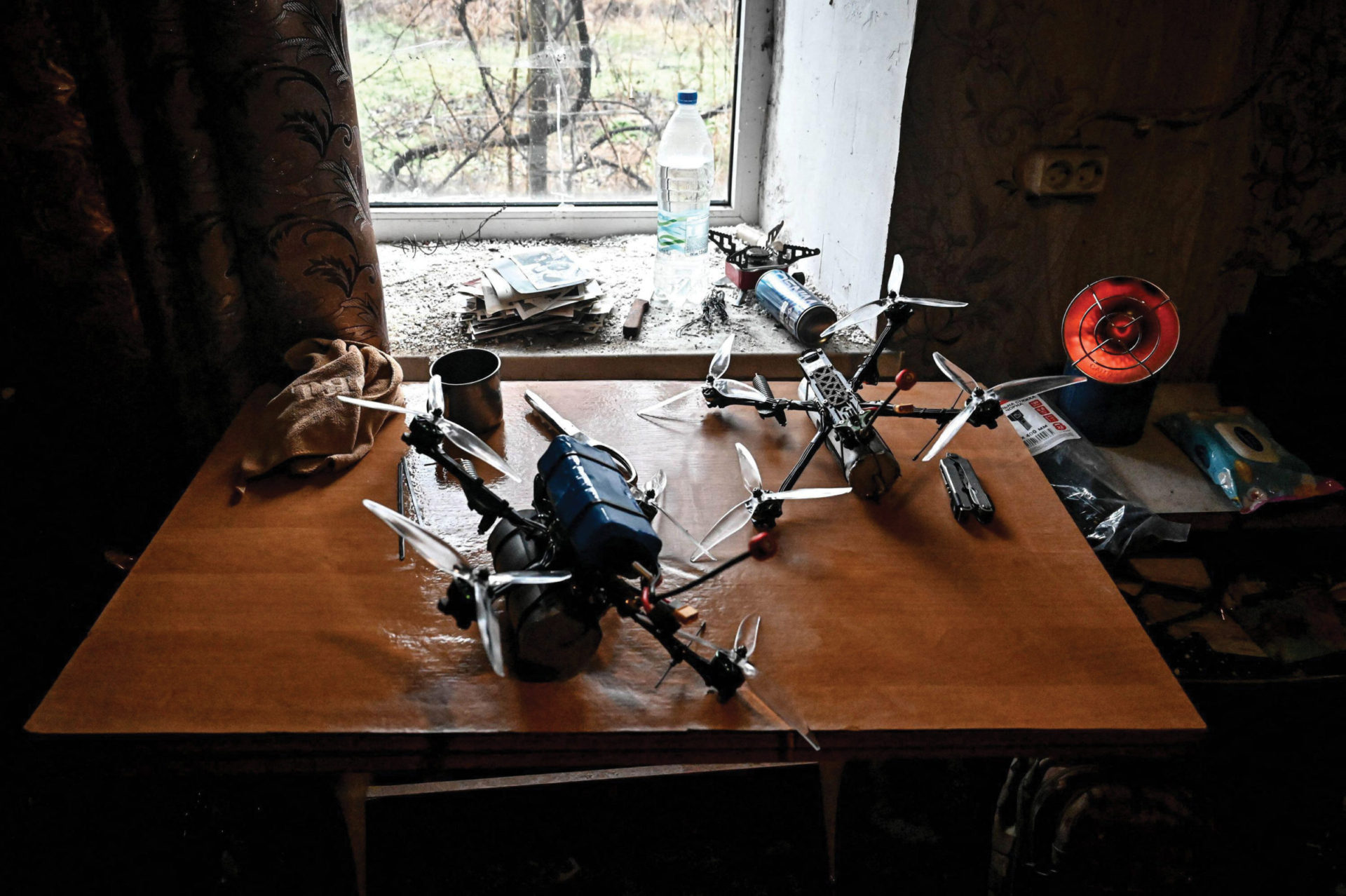
On June 13, 2025, Iran’s air defense network was largely silent in the face of an intense Israeli bombing campaign. Just before the attack, swarms of explosive quadcopter drones, launched by Israel from inside Iranian territory and acting on vast troves of intelligence sifted with the use of AI to select targets, had taken out Iran’s radar systems and numerous missile sites. Israel’s one-two punch made Iran an object lesson in how a combination of AI and drones is blazing a new trajectory for international politics.
Not long before, on June 1, Ukraine had employed a strikingly similar tactic, using cargo trucks with false inventories to smuggle drones deep into Russian territory. The drones had been trained using AI to recognize Tu-95 “Bear” bombers based on photographs taken of a decommissioned version in a Ukrainian air museum and to recognize the weakest point of the bombers, often the fuel tanks in the wings. This allowed the drones, flying first autonomously and then with human pilots, to strike Russian bombers with high precision as far away as Siberia.
In the grand scheme of geopolitics, these events were small. The conflict between Iran and Israel ended up being more like glorified shadowboxing than real war, and the Ukrainian strike on Russia did nothing to change the relentless, grinding attrition of the front line. These events are not obvious ruptures in international politics, as when nuclear fire consumed Hiroshima and Nagasaki in August 1945. That moment announced with dreadful clarity that the future of war and strategy would never be the same. The use of AI coupled with drones, however, is more like Sputnik in 1957, a seemingly small event that nevertheless drastically altered the human relationship to technology.
Heidegger once remarked that the first images of Earth from the Moon shocked him because they revealed a new way of grasping the human condition, drained of direct human experience. AI-enabled drone strikes carry a similar symbolic charge: they represent war drained of direct human contact.
What does it mean for this relatively cheap and widely available technology to exist in the hands not only of sovereign states but of non-state actors, rebel groups, terrorists, and even ordinary people? It means that in fragile or conflict-prone regions such as parts of Yemen and Pakistan and elsewhere in the Middle East and Africa, small groups of motivated individuals will be able to destabilize political authority through attacks on infrastructure that is far from where those groups are operating, threatening at a whole new level the state’s capacity to control its territory and population. AI-plus-drone technology thus accelerates the fragmentation of international order by weakening the sovereign state’s grip on territory and empowering local groups as well as opaque, transnational networks capable of organized violence.
The diffusion of cheap AI drones — and thus of a relatively easy and far-reaching means of violence — will likely evince a response from sovereign states. The great powers may expand their capacities for surveillance and security and reemphasize the importance of borders. The global cosmopolitan fluidity of recent decades may yield to a renewed focus on territory and control. What emerges would not be the end of the current order but its contraction and reinvention. In this scenario, states will reassert their sovereignty not out of a sense of revanchist nostalgia but of state survival.
Perhaps none of this will occur. But machine learning software and drone hardware are powerful, and now both easily accessible. The confluence of the two, and their likely increasing deployment to inflict violence, demands a thought experiment about the future we may face.
The ultimate, if déclassé, question in political thought is: Who rules, and how is that rule justified? Various justifications have been offered, such as faith, reason, or the will of the people, but for its implementation each ultimately relies on force. Legitimacy requires the capacity for violence. In the age of Enlightenment, the sovereign state emerged as the sole entity authorized to use violence within a defined territory. Sovereignty meant nothing without territory, just as the “rights of man” meant little without property. Hence the modern state became defined by its monopoly on legitimate force.
The origin of this concept helps to clarify AI’s potential effect on international order. In the 1500s, Europe’s religious unity under the Catholic Church collapsed from the pressures of the Protestant Reformation and rising nationalism. These in turn were enabled by a profound transformation: the spread of literacy through the printing press. Rising literacy fostered the prestige of vernacular languages, national literatures, and new interpretations of Scripture. Political identity — Italian, Spanish, English — was shaped as much by Dante, Cervantes, and Shakespeare as by any prince.
When the Thirty Years’ War, largely between Catholic and Protestant territories, ended in 1648, the new political order came to be known as “Westphalian,” named after the peace treaty. Westphalian politics was governed by the sovereign state, its political authority bounded by its territory, and its relations with other states governed by treaties backed by a balance of military and economic strength.
But Europe’s political transformation did not destroy the Catholic Church. The Church responded to the twin challenges of Protestantism and nationalism with reform and consolidation, becoming more centralized, more professionalized, and more capable of global expansion. Even as Christendom fragmented, the Church grew more coherent and purposeful.
A similar transformation now confronts the modern nation-state. Like the Catholic Church in the 1500s, the nation-state has long struggled against forces of dissolution. But a technological and political upheaval may now be triggering its reassertion.
The story of the nation-state’s decline goes roughly like this. Globalized economies favor the unrestricted movement of goods, capital, and labor. The institutions and practices required for this movement conflict with national cohesion. International governance regimes — think of the United Nations and the European Union — undermine the state’s capacity to define and defend its own laws and customs. These pressures converge in the question of how to think about immigration: popular discourse may focus on borders, on the state’s sovereignty, and on individual rights, but the deeper challenge is to the legitimacy of the distinction between citizen and noncitizen. That distinction — the political distinction par excellence because of its close association with the question of who rules over whom — is now blurred by a cosmopolitan global order that prizes universality over cultural and territorial particularity.
Not only does cosmopolitanism call citizenship into question; it also gives rise to new forms of violence that challenge the territorial logic of the state. The global diffusion of media in the twentieth century made human suffering visible in unprecedented ways, creating a moral imperative to act, often without regard for the sovereignty of other states. Humanitarian intervention — often a euphemism for military invasion — became a new instrument of policy for major powers. The disjunction between state sovereignty and cosmopolitanism has reached its most radical expression in international terrorism. Transnational groups, bound not by nationality but by ideology, target civilians in pursuit of political aims.
The story has an important technological component. As we’ve seen, the Westphalian system was formed partly as a response to the effects of the printing press; now the system finds itself reshaped by the cumulative impact of nuclear weapons, mass mobility, and instantaneous communication. Nuclear arms make direct conflict between great powers intolerably dangerous, replacing conventional warfare with long strategic stalemates and seemingly irrational proxy conflicts. Air travel allows individuals to think of themselves less as nationals and more as citizens of the world. Global supply chains bind the economic life of one nation to the productive capacity of far-flung others. And the spread of telecommunications, particularly the Internet, has created a global information market, where ideas flow without much regard for borders.
Artificial intelligence would appear, at first glance, to complete the long decline of the nation-state. AI amplifies multiple trends that have already undermined state authority, from the diffusion of information to the trespassing of territorial boundaries. But the use of artificial intelligence in tools of violence marks not a mere intensification of the globalizing trajectory of international politics — it is a qualitative shift.
In both AI drone attacks in June, a relatively small number of autonomous systems directed by human ingenuity and enhanced by artificial intelligence undermined existential components of national defense, especially territorial sovereignty. With a fraction of the power by which states are usually measured, Israel and Ukraine were able to create national crises for their enemies.
These operations reveal how modern states, even those with formidable military capabilities, can be penetrated and embarrassed by small, sophisticated actors, radically shifting the traditional distribution of power.
For most of human history, a government could generally assume that its core infrastructure — such as military bases, transportation hubs, command centers, and supply depots — were safe so long as that infrastructure remained deep within its territory. In his explanation as to why defense is the stronger form of war, the Prussian general Carl von Clausewitz observed that territorial depth was one of the key points that made an attack weaker as it drove deeper into enemy territory. The example he used was the territorial vastness of Russia that finally defeated Napoleon’s Grand Army. Land mass as a means of defense has been a core assumption of Russian grand strategy ever since, and it applies to any large state.
That assumption no longer holds. Today, a civilian unknowingly transporting a drone-equipped container may become the vector for a precision strike against critical infrastructure. An adversary need not occupy territory to degrade state capacity; it need only deploy a small, intelligent system to the right location. The methods now available to motivated actors, whether state-backed or independent, can be turned against any society that has soft targets and open networks — which is to say, the world.
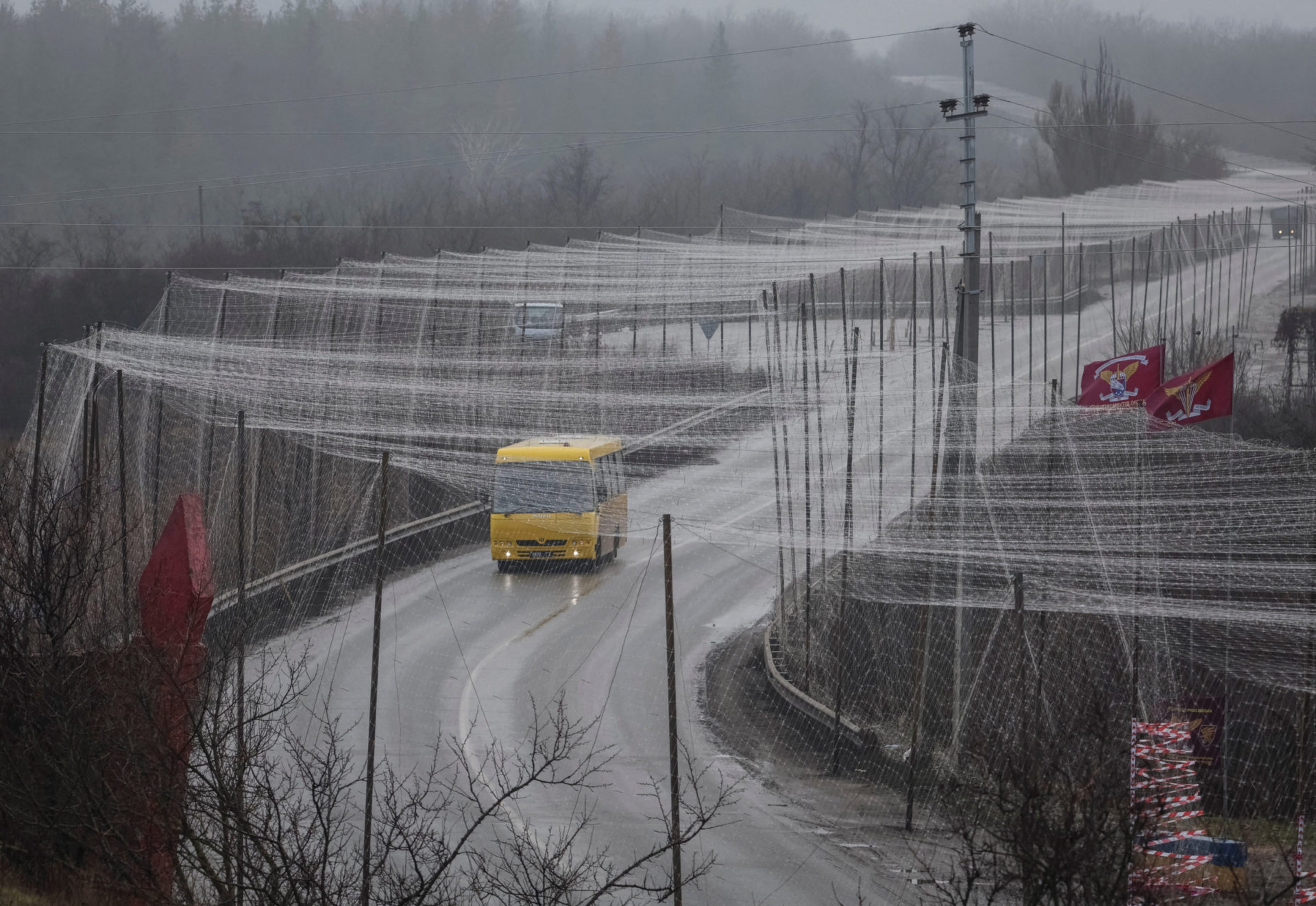
AI has thus accelerated the difficulty states face in performing their most basic function: the securing of territory against violence. It has elevated the threat of terrorism from the realm of chaos to a structural feature of the international system. Weapons that are inexpensive to produce and equipped with autonomous targeting systems now offer individuals or small, loosely organized groups the capacity to carry out attacks once reserved for the state. These are not insurgents with ArmaLites and Kalashnikovs, but actors with the ability to paralyze critical infrastructure, such as water purification, power substations, or an airline’s fleet, deep behind enemy lines. In such a world, the state’s traditional monopoly on the legitimate use of force within its borders begins to collapse. That legitimacy has always depended partly on the state’s guarantee to protect its population’s physical safety. When that guarantee fails, not through conventional invasion but via diffuse, unpredictable, and technologically enabled violence, the legitimacy of state authority erodes. What remains is a legal form that no longer serves its purported political function.
Should this trajectory continue, large portions of the globe — once under the formal control of governments — could slip into gray zones, regions where the state persists in name but no longer provides security or enforces basic order. As public power recedes, private actors backed by major powers would be obvious contenders to fill the void. Consider the Hudson’s Bay Company: the British Empire granted it governing authority over vast territories in the New World. It effectively ruled as a sovereign power throughout much of the eighteenth and nineteenth centuries — raising militias, enforcing laws, and negotiating independently with indigenous tribes. It is an example of privatized sovereignty operating in the name of hegemonic power.
The Hudson’s Bay Company could be the pattern for our fragmenting future, where data centers and automated drone manufacturing replace fur traders and stockade forts. Corporate oligarchs might restore order where conventional forces have failed, such as in Yemen, where American airstrikes cannot defeat the Houthis and ground operations are prohibitively expensive. Alternatively, entrepreneurial warlords equipped with AI-enhanced drones and local popular support could fill these roles. The future for these men is bright, if they have the nerve to seize it.
In this environment, the Westphalian system of nation-states — already a fragile fiction in many regions — would continue to disintegrate. What emerges in its place is not a new form of universal order, but a patchwork of contested zones, where sovereignty is asserted not by law but by de facto control, and legitimacy flows not from constitutional authority but from the capacity to provide security and thus command loyalty. The result is a new frontier offering opportunity to those who can master violence more efficiently than the failing states they displace. Politics, like nature, abhors a vacuum.
It would be a mistake, however, to assume that the Westphalian system, as a whole, is destined to collapse. Its core — Europe, North America, Russia, and parts of East Asia — possesses the technological and institutional capacity to adapt. If these states adapt to AI, using it to reform and consolidate authority, replacing bureaucracy with AI systems, they will begin to resemble nineteenth-century nation-states, optimizing both physical and informational security through highly integrated, data-driven enterprises. If states fail to adapt, the consequences will be more than administrative stagnation. These states will lose their ability to secure their territory through the enforcement of laws, and will consequently no longer participate meaningfully in international politics. States that cannot wield power effectively will not endure.
The stakes are existential. Governments that persist will direct their resources toward AI systems capable of monitoring civilian life, not only to detect threats but to preempt them. Algorithms will scan communications, analyze reading habits, and identify patterns of discontent before they can crystallize into action. Borders will be hardened not only physically but digitally to ensure that every person within the territory is registered, tracked, and linked to a comprehensive profile accessible to state authority. Armed forces will integrate AI not merely for parity with rival powers but to police increasing illegitimate violence within their own jurisdictions.
In this scenario, the Westphalian system will contract as a global framework, returning to something closer to its nineteenth-century form, with a few core centers of power that exercise strong internal security and constantly probe for an advantage abroad. As they adopt artificial intelligence to preserve sovereignty and suppress internal threats, they will resemble what Thomas Hobbes called the Leviathan: a powerful, watchful, and absolute power that he did not hesitate to compare to a god. Customary rights like freedom of speech, of religion, or of private association will come under increasing strain. To many liberals and libertarians, this will appear as the collapse of constitutional democracy into a technological police state. They will be right.
It is worth recalling that the foundations of liberal political thought were laid in part by Hobbes, whose central concern was neither liberty for its own sake nor power for its own sake — it was liberty born from state-enforced peace.
Hobbes argued that without the firm and consistent application of law, society would descend into chaos, violence, and fear. The rights of the sovereign’s subjects, in his view, depend on the sovereign’s willingness to use power to protect them. When that protection is withdrawn or rendered uncertain, the result is the “natural condition” of mankind: “solitary, poor, nasty, brutish, and short.” The prosperity, stability, and cooperation that we associate with modern liberal economies are not the spontaneous products of freedom. They are the effects of a powerful state that guarantees order. In this light, the reassertion of state power in the age of AI may not mark the betrayal of liberalism but a return to one of its first principles. Defenders of liberal democracy, then, ought not instinctively fear the emergence of a more centralized and coercive state.
Modern citizens have forgotten, or never learned, the terror and devastation that reigned in Europe during the Thirty Years’ War, when parts of Germany suffered a 50 percent decline in population. Indeed, even the extreme human cost of the World Wars, far more recent and relevant to us, has become hard to conceptualize. The looming AI future may necessitate a centralized police state to prevent a descent into a technologically augmented state of nature, where the individual is powerful but unprotected from Al-equipped drones both foreign and domestic.
This, at least, is what we will be told: to preserve liberal democracy, it will be necessary to increase the police power of the state, using AI to preserve order against the threat of AI. Needless to say, this prospect brings with it a danger of a different kind: dehumanization. The new forms of surveillance, social credit scores, and restrictions on personal liberties will continue the trend of spiritual exhaustion that marks whatever is left of modern nations. This means that for the state to be effectively strengthened against rogue AI it must also be reimagined. The national security concerns of the future preclude a simple resistance to the coming political transformation. Instead, we should think carefully about guiding it lest security come at the price of everything that makes human life worth securing, particularly our capacity to think freely.
When something essential to humanity’s capacity and dignity is lost, pulverized by the requirements of life under the AI Leviathan, will we still be able to say that those who dwell within the borders of international order are truly better off than those who live in the lawless periphery beyond?

Keep reading our
Spring 2026 issue
Happy meals • Ugly cities • Weak families • Powerful drones • Subscribe
Exhausted by science and tech debates that go nowhere?