Rational Magic
Why a Silicon Valley culture that was once obsessed with reason is going woo
You’re not hallucinating the great weirding of America. The visual evidence is everywhere. Start with what you can see.
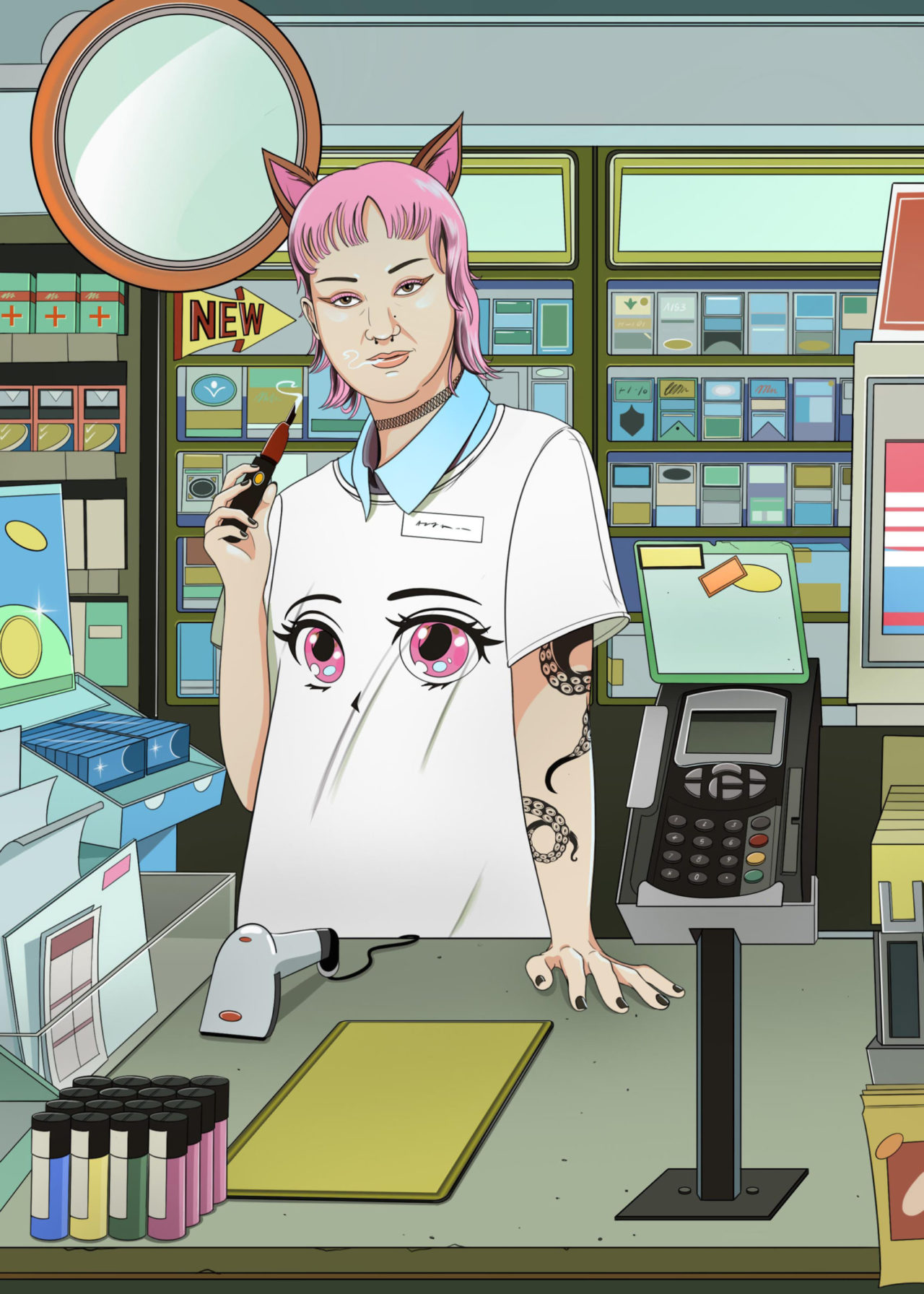
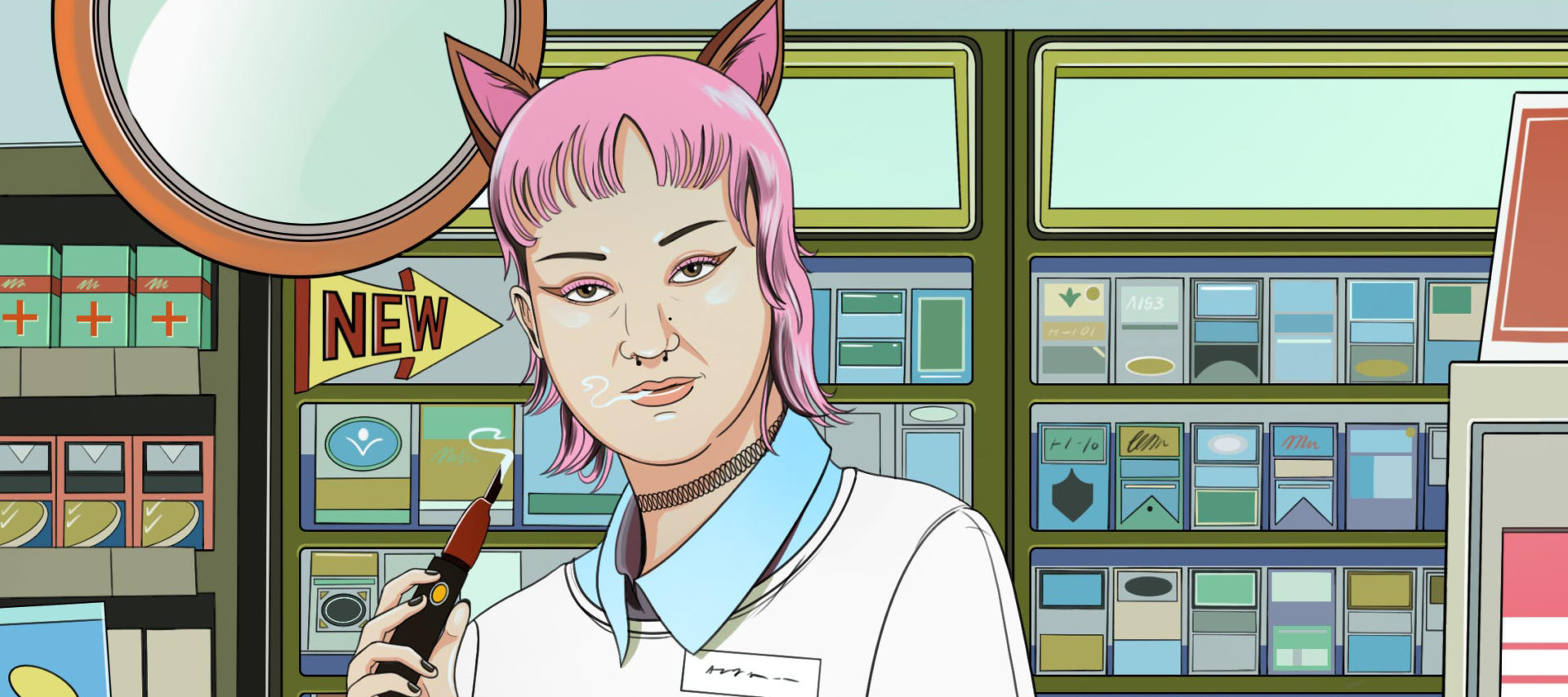
You’re in a small town in Wisconsin, the heart of Normal America. The transgender assistant manager at CVS has a septum piercing, a wolf cut, and a nametag that reads “Finn.” A block away, the 4channer construction worker in the Sam Hyde shooter shirt listens to Bladee and plots his impending virality. At Target, the anime section has metastasized from one shelf to an entire aisle.
These aren’t random weirdos and they aren’t teenagers in a phase. Walk through any office park and you’ll find the same aesthetic bleeding through the cubicles: anime stickers on laptops, Discord running on second monitors. They’re a new American type, young but trans-generational, as distinctive as the organization man or the valley girl once were. I call them dinergoths: what you get when economic mobility dies, suburbs become psychic deserts, and Discord becomes more real than your cul-de-sac.
The term came to me when I was trying to identify what had, over the past decade, silently washed over the 95 percent of America that lived outside of the superstar cities. Placelessness without cosmopolitanism and with complacent downward mobility. A post-subcultural “alt” aesthetic with a post-nerd fandom orientation that’s become a new mainstream. Queerness but casual and prole-ified. Dinergoth: “diner” for provincialism, “goth” as lazy shorthand for alternative aesthetics.
These tendencies are correlated. Something is making them happen together in the places previously considered to be the most normal. A new quirk of 2020s America is that geek equals goth equals left-behind American.
Dinergothdom exists as both a concentrated archetype and a mass-cultural wave. The dinergoth core is the pierced-up, gender-fluid Amazon warehouse worker who streams on Twitch, writes fanfiction, wears a furry tail to raves, runs an OnlyFans, and dreams of voice acting while working nights at the fulfillment center.
But like microplastics, dinergoth traits — anime consumption, subcultural diffusion, digital-first socialization — have spread into everything. You don’t need to be deep in it to show signs. It’s in the memes, the slang, the TikToks. Culture that once lived on 4chan and Tumblr now shows up in the bros’ group chat.
Even when the full archetype isn’t present, the vocabulary is. People who aren’t dinergoths still live inside the same convergence. The online normie can no longer help but get the geek’s reference. They understand the furry jokes, the anime reaction images, the gender tone. Formerly underground subcultural tributaries have emptied into the same water and now the only difference between people is how deep they swim.
In the winter of 2021, the dinergothification of my life began.
I had been hopping around Airbnbs across the West Coast since Covid hit and the San Francisco startup that employed me closed the office and forced everyone to go remote. I settled in Portland, Oregon: the right mix of cost, urbanity, and nature. Not a backwater by any stretch, but a not-very-diverse city with small-town energy and a relatively functional housing market that normal people could aspire to afford. Despite its self-conscious “weird” image, Portland is basically what mainstream America looks like.
I matched with a girl on Tinder. Her profile listed she/they pronouns, mentioned trauma, and showed her in cosplay.
It was the coldest weekend of the winter and my date was smiling through a shiver. The pandemic meant that we were drinking out on the bar’s freezing patio. In her skirt and fishnet stockings, she was absolutely not dressed appropriately for the weather, and her thick eye makeup was badly applied. Her nose was aquiline with a septum piercing, and her other features were catlike — high cheekbones, weak chin, and big steel-blue eyes under dyed red hair.
“You look cold!” I said with a friendly half-laugh, so as to avoid embarrassing her about her disastrous misapprehension of the weather. I offered my heavy jacket and she refused, still shivering. After a bit of small talk, I politely pushed the issue until she relented, and I draped the puffy garment over her shoulders. She was grateful and her smile lit up more.
“I have autism. And anxiety. And OCD and ADHD.” She said it fast, like it was a grocery list, like it explained everything. And maybe it did. It was a cocktail of tendencies that made it hard for her to express herself or ask for what she needed. There was an admirable lack of self-consciousness in her voice — something that verged on pride.
She asked what I’d been interested in lately, and I replied that I’d been reading a book about Maoism — I had come from a world where it’s important to signal that you’re into ideas. “W-what’s ‘Maoism’ again?” she asked, inquisitive but with an uncertain stutter, like she thought she was supposed to know what this and other -isms meant. I explained that it’s a type of communism and she nodded dutifully with an earnest smile. She just seemed happy to be hanging out together.
We went to my place and she excitedly grabbed the remote to put on the anime Soul Eater on my living room TV. It was wild and expressive and weird, and devoid of irony in a stereotypically Japanese way. I had never really watched anime before — I was enjoying it, but I felt guilty doing so as a sophisticated adult. But if a hot girl likes it, can it really be cringe?
On our second date, she brought a huge bag of sex toys and BDSM gear — unprompted, unashamed. She dropped it on the floor of my apartment with a thunk. It wasn’t a gesture or a performance, but purely practical. It meant: I’ll be staying over a lot.
Within three dates we made our relationship official. This relationship was characterized by picking her up from her parents’ home in the suburbs, watching anime or Disney cartoons or The Sopranos (my choice) while she laid on my lap, playing Stardew Valley on her Nintendo Switch and hitting her weed vape. She loved to dance when we went out, and, being an ex–theater kid, was really good at it. She’d stay over almost every night for our two-month relationship, partly as respite from her uneasy home life.
The breakup was sudden. Her reasoning was incoherent to the point where I am not even sure she understood her own feelings, but buried in the jumble of justifications was an insinuation that I was too much of a yuppie for her. This was indeed a disconnect — I worked in tech, she worked at a vape shop; she liked the simple things in life and I had cosmopolitan intellectual pretensions; I lived by status gradients that I couldn’t admit, and she just existed in cozy downward mobility. Only later did I realize that our breakup wasn’t unusual for her. It was how things tended to end.
The breakup hurt. I loved her simplicity, her lack of guile, her low-stakes way of being that was so different from the status-anxious lifestyle that was practically the law of living in San Francisco or Washington, D.C. I wanted to be part of her little world.
What was she? What was this little world of hers? Very online in a very different way than me — she liked streamers and YouTubers and The Owl House fandom. She was oblivious to the status signals that I had taken as a given.
I had a broken heart and am a bit neurodivergent myself, so I needed answers and I needed a category. Tumblr girl? Too specific to a time and place. E-girl? Not really: her social media use was mostly scrolling TikTok and Instagram content rather than creating it. Fandom geek? Alt-girl? Just neurodivergent? None of these captured the varied traits I would later come to recognize as forming a stable and increasingly common constellation.
I would find they practically make this kind of person on an assembly line. America in the 2020s is a dinergoth factory.
The dinergoth is made possible by two things: American stagnation and the breakdown of barriers.
The economics tell the story. Roughly half of 18-to-29-year-olds now live with their parents — numbers not seen since the Great Depression. But what has recently changed is that nobody is ashamed. This isn’t the temporary but embarrassing wait for recovery, it’s the new normal.
Gen Z homeownership sits well below that of prior generations. At age 27, only 33 percent of Zoomers own homes, compared to 38 percent of Gen Xers and 41 percent of Boomers when they were the same age. Each generation slides further from the American Dream, and they’ve stopped pretending to climb.
Sixty-four percent of Gen Z say they prioritize “peace of mind” over wealth accumulation. Of course they do. When a one-bedroom costs 70 percent of your income, when your student debt payments are higher than your parents’ mortgage, when every job is temporarily permanent, what exactly are you supposed to accumulate? The economic race is over, and normal Americans lost. The dinergoth looks at this and makes the only rational choice: stop trying to win.
Meanwhile, the places they’re stuck in are becoming indistinguishable. Regional culture is disappearing among American youth. Linguistic research provides the clearest evidence: the stark decline of the Texas accent among young people and of the Northern Cities Vowel Shift around the Great Lakes. Everywhere you look, younger generations are dropping regional speech for General American pronunciation.
This trend of cultural flattening is particularly noteworthy because people are moving around less. In 2023, only 7.8 percent of Americans changed residence — the lowest rate ever recorded since the Census began tracking mobility in 1948. Interstate moves, once a powerful homogenizing force, dwindled to just 1.4 percent of the population, about half of what it was twenty years ago. What we’re seeing isn’t the result of mass relocation but something stranger: a cultural convergence happening in place. Provincial people are becoming more provincial while the provinces are losing their soul. And a new culture has flooded in from the Internet.
No single data point better illustrates the cultural movement of youth than this: 42 percent of Gen Z watches anime weekly (compared to 25 percent of Millennials), but only 25 percent of Gen Z follows NFL football (compared to 44 percent of Millennials). Anime has transformed from niche subculture to mainstream entertainment. The numbers are staggering: the fastest-growing anime market in the world is North America, with an expected 16 percent annual growth rate by 2030. Crunchyroll, an anime streaming service, has an estimated 53 million North American viewers, while manga sales exploded up to 500 percent at some Barnes & Noble locations in 2020. Major retailers like Walmart and Target now dedicate significant shelf space to anime merchandise, with the global anime merchandising market projected to reach $20 billion by 2032.
Hot Topic, the emo apparel store in nearly every American mall, tells the story of geek and alt-fashion cultures collapsing into one: three quarters of its products are licensed pop-culture merchandise — including not just anime but everything else for fandom and gamer types.
We are in the early stages of a Cambrian explosion of novelty, and the most comfortable amidst it are the neurodivergents. Thirty percent of adults under 30 identify as neurodivergent, while just 6 percent of those over 65 do. This is a mix between diagnostic improvement and a generation using medical language to describe their relationship to a fundamentally different world. When reality is 34 browser tabs, three Discord conversations, and a Twitch stream running in the background, ADHD is an adaptation.
The geographic distribution of queerness defies every elite assumption. In a 2022 study, rural Appalachian youth — in deep-red Trump country — reported transgender or nonbinary identity at 7.2 percent, four times the 2017 national baseline of 1.8 percent. This inverts the adult pattern where cities are queerer than rural areas. No coastal elite indoctrination here. It’s what happens when traditional life paths close everywhere and the Internet becomes the only space with options.
The story tying together all the threads of this great weirding is that economic precarity creates alternative success metrics, which is why you don’t easily find dinergoth tendencies among the strivers in San Francisco and New York City.
The new economic subject for the rest of America? Online possibility. Playing the Internet lottery and trying to build a following for your stream. You can meet anyone online. You can join any community. You can create anything from anywhere and get cozy glory from it. The dinergoth condition is not just the prole-ification of anime or queerness or alt aesthetics, but the creative empowerment of the masses.
This is the story of the collapse of the middle-class consensus.
The story goes like this. The great stagnation desacralizes local America through the homogeneous efficiency-machine of national private equity, and everything flattens. Gen Z is disinherited by Boomer policy that culminates but never crests, rationing the good life in generational warfare. Regional accents and identities and cultures are vanishing. Liquid Internet flows into this void as a mass-vision event, the mythic power of fandom and content overflowing from and washing over millions of minds in placeless America, the new soul of a soulless world. Subcultures and nerd cultures disappear into simply culture, self-oblivious and technicolor and sincere in a way that postmodernism could never permit. Instead: a riot of myth and meaning in the fandom-noosphere that bootstraps itself from and then forgets the North American provinces.
The sigh from the provinces is the Hello Kitty ketamine raver, the dispensary cashier in the Korn T-shirt, the TikTok cosplayer dancing in the parking lot, the VTuber with a day job in a suburban office park: the Deltarune hyperfixator, the Tumblr alumnus, the state college theater-enby, alt-prole girl-autism. Mallgoth aesthetics become Walmart defaults, subcultures converge into the downwardly mobile mass aesthetic. Anime becomes cool, not by assimilating into taste but by overwhelming it. Queerness leaves the sophistication-cradle of the urban bohemian elves and conquers the tacky masses of the hinterland middle and lower classes; the great severance comes in the form of hobbit parents shrugging at the total queering of their sons and daughters.
This is the story of the new pan-Pennsylvanian, pan-Floridian, Pacific Northwest provincial cracker. It’s the story of the omni-racial anime white-trash of the Texas Triangle, the ambiguously emo Arkansan, the Nintendo Hispanic, the black weeaboo, the Internet dreamer forced to awaken in the wasteland of reality.
It’s the emerging ensoulment of Western Massachusetts, not Boston; Buffalo, not Brooklyn; the Inland Empire, not LA. Queerness-by-default is no longer for the grad student but for the townie gamer in the hentai hoodie.
You’re somewhere over Normal America. From a coast-to-coast jet trajectory, you see it with the unmarred vision of private equity. There are lights below — many places with many people, no longer distinct. Upward mobility has been mined out with brutal efficiency. In the Dallas sprawl there are functional and manicured suburbs where you can drive forever and still be nowhere. In Maine, the town is now a Dunkin’ Donuts and a rehab clinic. Pull back far enough and America becomes a single screen, ten thousand towns as pixels running the same program. Between them only bandwidth and weather.
The dreamers look skyward with longing. The Internet hums with its usual promise — you’ll find your people, your myth, your wonder, and maybe your transformation. There is no class consciousness. God is in heaven and all is right with the world.
Exhausted by science and tech debates that go nowhere?