
Offloading Ourselves
An inquiry into staying human in the age of AI
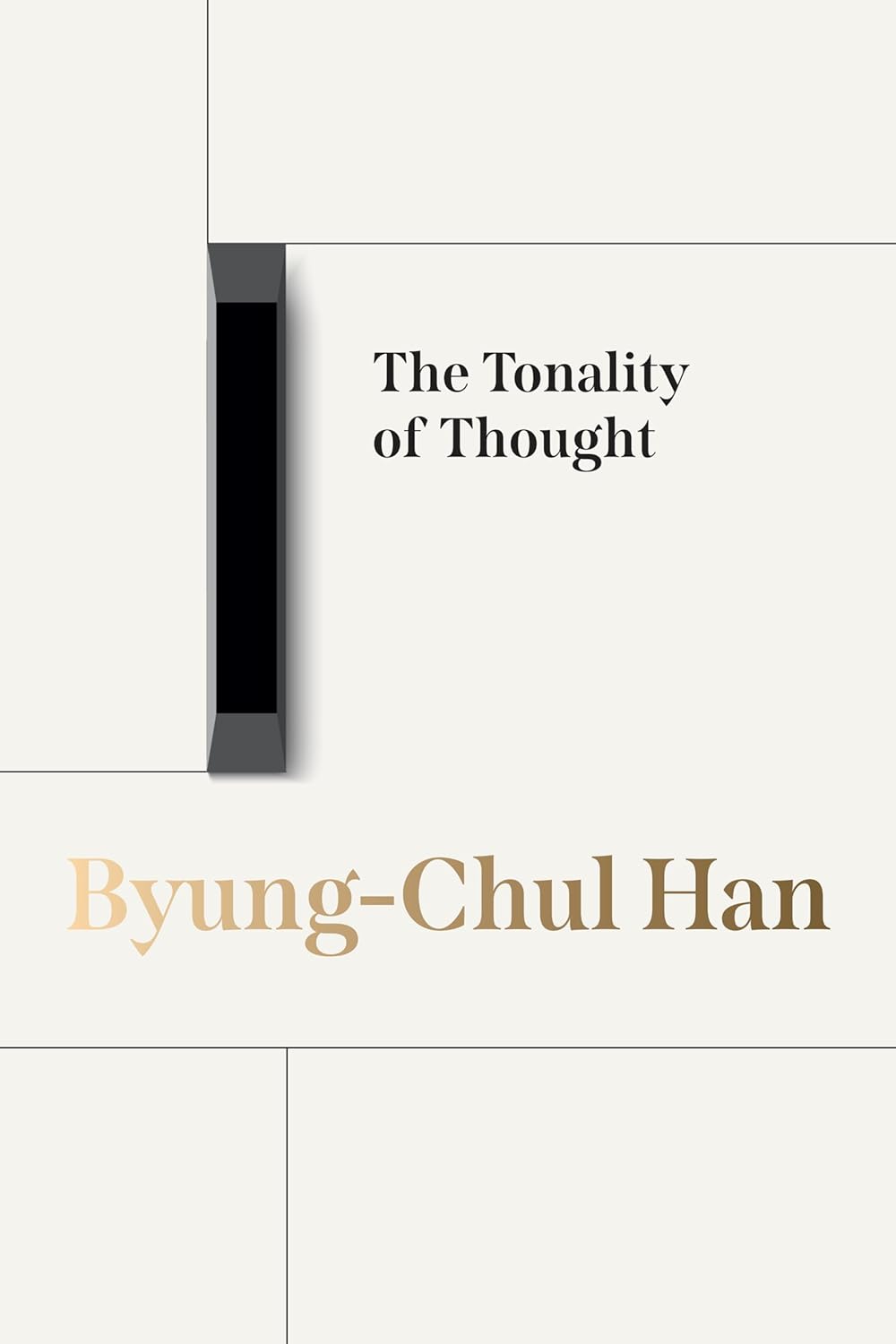
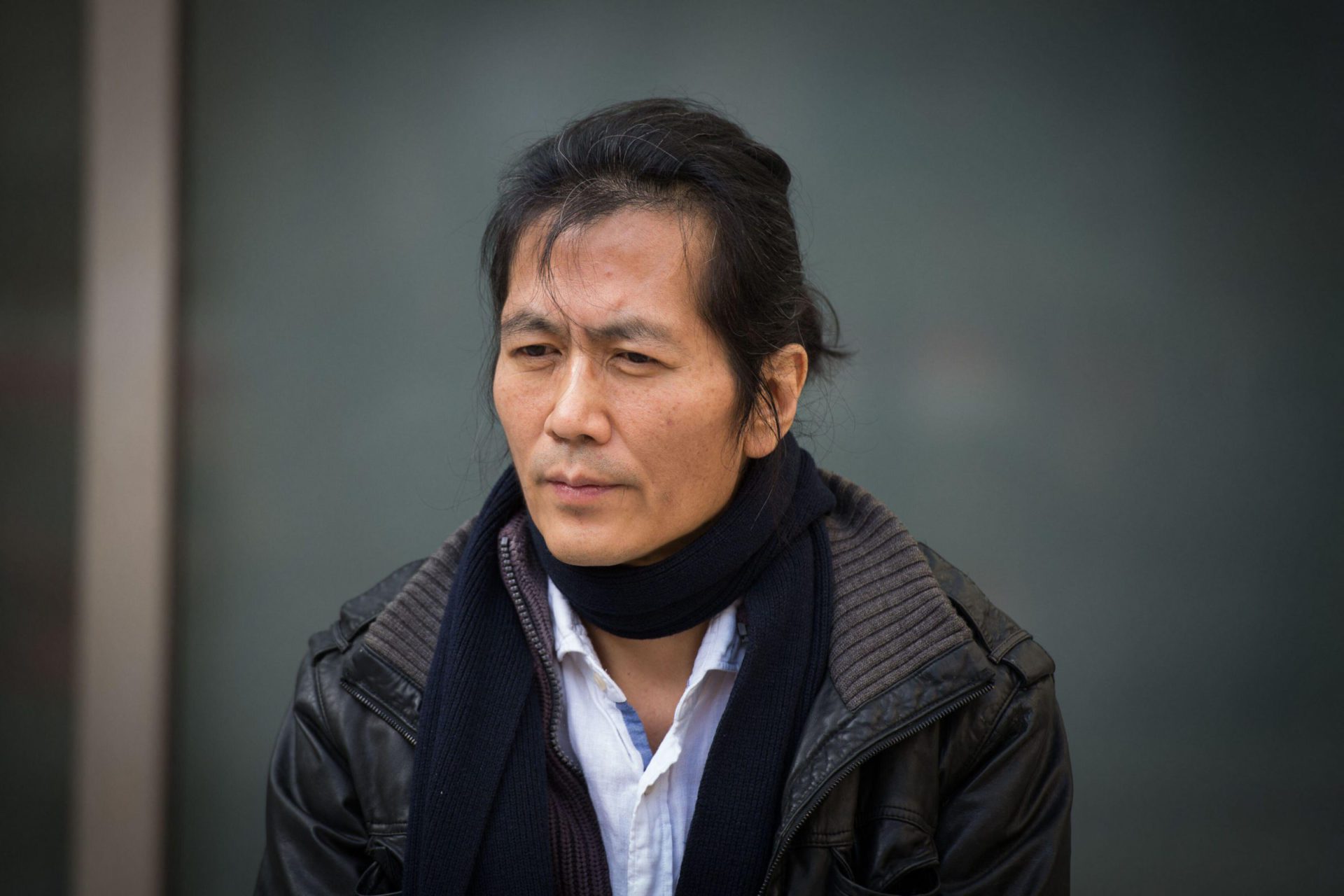
Byung-Chul Han is one of Europe’s most widely read philosophers. His audience in the United States has grown considerably over the last decade, though mostly outside the academy; in 2024, the New Yorker dubbed him “The Internet’s New Favorite Philosopher” — an ironic label for a thinker who keeps his distance from the online world. His latest book, The Tonality of Thought, gathers three public lectures that serve as windows into his work and way of life. In its own way, the book makes sense of why his writing has struck a chord in the digital age.
Han grew up in South Korea and now lives in Berlin. Most mornings, he begins his day not with his phone, not with email or headlines, but with Bach. A Steinway grand piano sits in his apartment, where he plays the aria from Bach’s Goldberg Variations — a spare, unhurried theme that opens and closes a set of thirty short pieces. He calls the piano his prayer wheel, like those found in temple courtyards across Asia. At the piano, he says, he does not so much think as let thinking take place. “For me, thinking is thanking.” When he plays, thoughts arrive like visitors, and he answers them with a quiet grazie.
A few steps from the piano stands an art nouveau writing desk. Every day he walks back and forth between the piano and his desk — twenty times, by his count — returning to Bach when he has no words. Han is a philosopher, though not the kind the last century prized. He builds no system, offers no program, stages no revolution. Nor does he stop at the unmasking of power. His books are unsparing in their critique of digital capitalism, but they do not end in critique; they rest on a deeper sense of beauty, friendship, and transcendence — themes as old as philosophy itself.
For more than two decades, Han has shaped a form of writing equal to his concerns: brief, concentrated books that think in movements rather than arguments. Their brevity feels deliberate, as if composed for the attention economy yet guided by another sense of time. Winding through subjects as varied as Zen, smartphones, and gardening, they often return to the same question: What has become of freedom in the digital age?
His best-known answer came in 2010 with The Burnout Society. At just over fifty pages, the book found readers well beyond Germany, in part because it named a condition many had felt but could not quite define, and in part because its diagnosis proved difficult to ignore. It made a simple yet bracing claim: in Western societies, the dominant form of power has shifted. No king commands us. No foreman stands watch. For many who work on screens rather than factory floors, there is no whistle, no visible overseer. The disciplinary institutions Foucault described — those that monitored, corrected, and confined behavior — still exist, yet they are less dominant in shaping how we live. A different logic has risen to govern our habits, and instead of repressing, it affirms. Instead of commanding, it motivates. Instead of saying no, it says yes — relentlessly.
If the old regime spoke in the voice of prohibition, the new one speaks in likes. Its pressure feels less like a frowning teacher and more like a game of comparison — with influencers, metrics, and a curated self that always seems one step ahead. We are told to optimize our sleep, perfect our diets, build our brands, unlock our potential. Listen long enough and you’ll learn how to biohack your mornings, discipline your focus, and transform your passions into revenue. Scroll long enough and you’ll be reminded that Beyoncé has the same 24 hours you do.
Power no longer feels like oppression. It feels like opportunity, a pressure that builds from within, overwhelming our sense of choice with a compulsion to perform. We become both manager and managed — both master and slave, as Han puts it — driving ourselves harder than an overseer would. We are not coerced, and there is no tyrant to resist. When we fall short, we only fall back into the grip of our own self-judgment. The feeling is not guilt, as with a broken rule, but humiliation. Unable to stomach failure, we follow the script of self-improvement, learning only to push ourselves until something gives way.
Burnout, depression, anxiety: these are the maladies of our time. No one denies their spread, but their wider significance is a matter of debate. For Han, they are not signs that the new order is breaking down. They are signs of its success. We are free — and the result is not liberation but exhaustion.
Han grew up in Seoul (a “hellish concrete desert”) and came of age during South Korea’s explosive 1970s. In the decades following the Korean War, the government had poured American-backed capital into firms like Samsung and Hyundai, turning family-run companies into engines of national development — flagships of capitalism on the Cold War’s Asian front. Han studied metallurgy at Korea University, aligning his future with the country’s expanding job market. But between classes, he sometimes looked up at the sky and felt his thoughts expanding in another direction. The world was too beautiful for a life designing alloys.
At twenty-two he left for Germany, telling his parents he would continue his technical education abroad. The story was plausible; West Germany was known for its technical universities, and South Koreans had become an increasingly familiar presence there. Han, however, was drawn to another Germany, the older Germany of poets like Hölderlin, who asked whether, when “life is sheer toil,” a person might still lift his eyes. Though he barely spoke the language, Han found his way into the difficult prose of German literature, studying in Munich before continuing at Freiburg, the longtime university home of Martin Heidegger. There he turned to philosophy and, in time, completed a dissertation on Heidegger himself.
Heidegger had argued that moods are not merely psychological states. They are ways in which the world comes into view. The mood of a painting, for example, is not simply an addition to an otherwise neutral scene. It is the very atmosphere — of, say, a stormy sea or a sunlit haystack — that can never be reduced to the objects in the frame. Peasant shoes in a Van Gogh painting can evoke a world of labor, of soil, of fields and the weight of rural life. Painting is an art of disclosure. And like the art of painting, wrote Han, “Philosophy always takes place in a basic mood.”
What Han would later diagnose as burnout is not just a condition of exhaustion; it is a condition of perception. Moods are how we feel the world, even before we think about it. They are less like emotions than the background conditions of our experience, like slow-moving weather patterns that give times and places their character. They cannot be examined like objects from the outside — we are always already within them — but they can be named and described. In Heidegger, Han found a way to notice them. And it made him weather-wise, alert to the world at a time when the weather was changing.
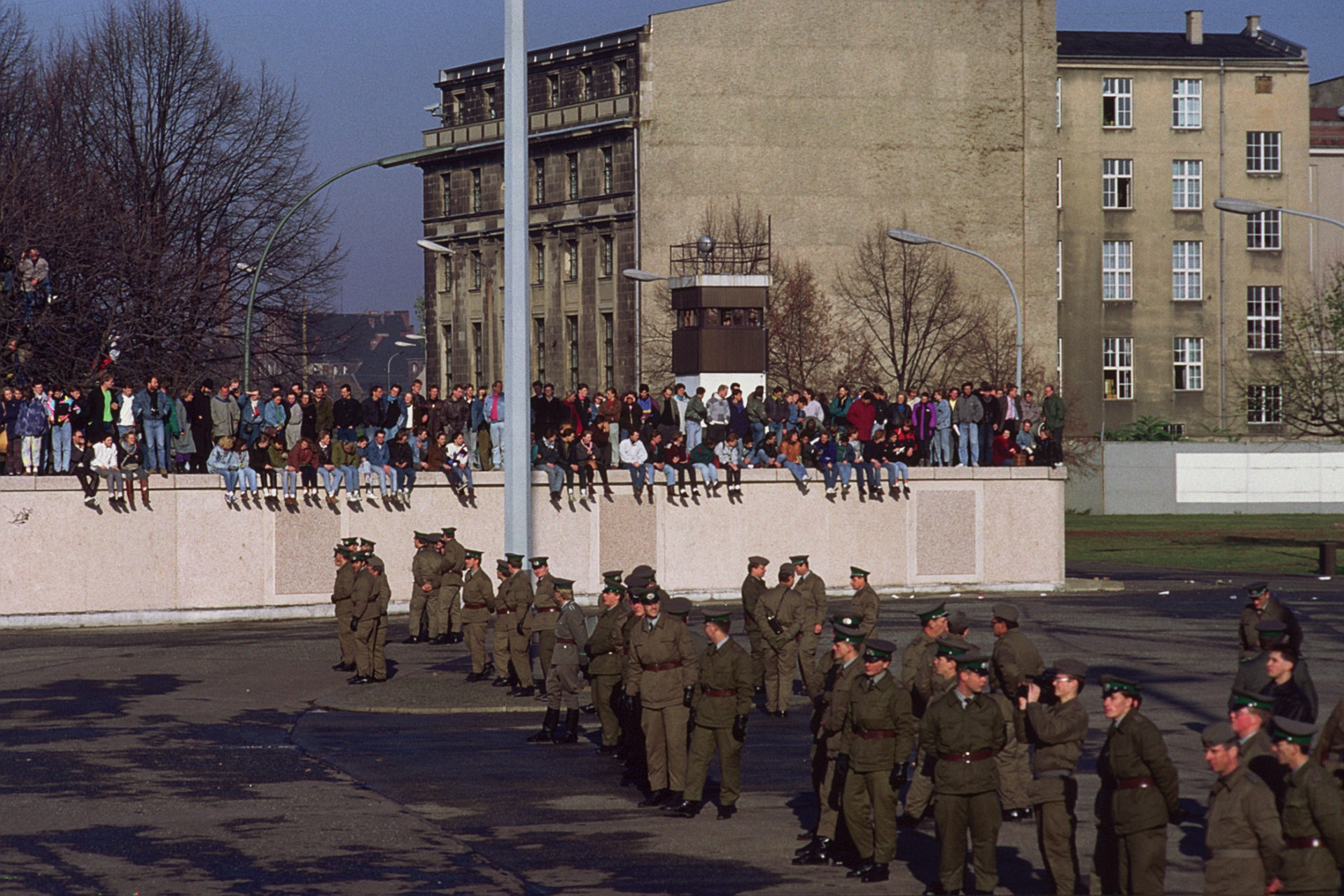
The Berlin Wall came down during Han’s years as a student, marking the end of the Cold War. For most in the West, the mood was jubilant. Liberal democracy and the free market had triumphed, and the specter of totalitarianism seemed to recede into history. The future, many assumed, belonged to societies that were more market-driven — and therefore more free. Han, however, had seen enough to question that story of progress. Growing up under the extreme pressures of Korean capitalism, he knew that domination could take many forms. South Korea had not followed the Big Brother model of the North, yet its people labored with an intensity that suggested another kind of domination — one rooted not in surveillance or prohibition but in competition, achievement, and the inner compulsion to perform.
If the twentieth century had feared domination by the state, the twenty-first would reveal another possibility: domination by freedom.
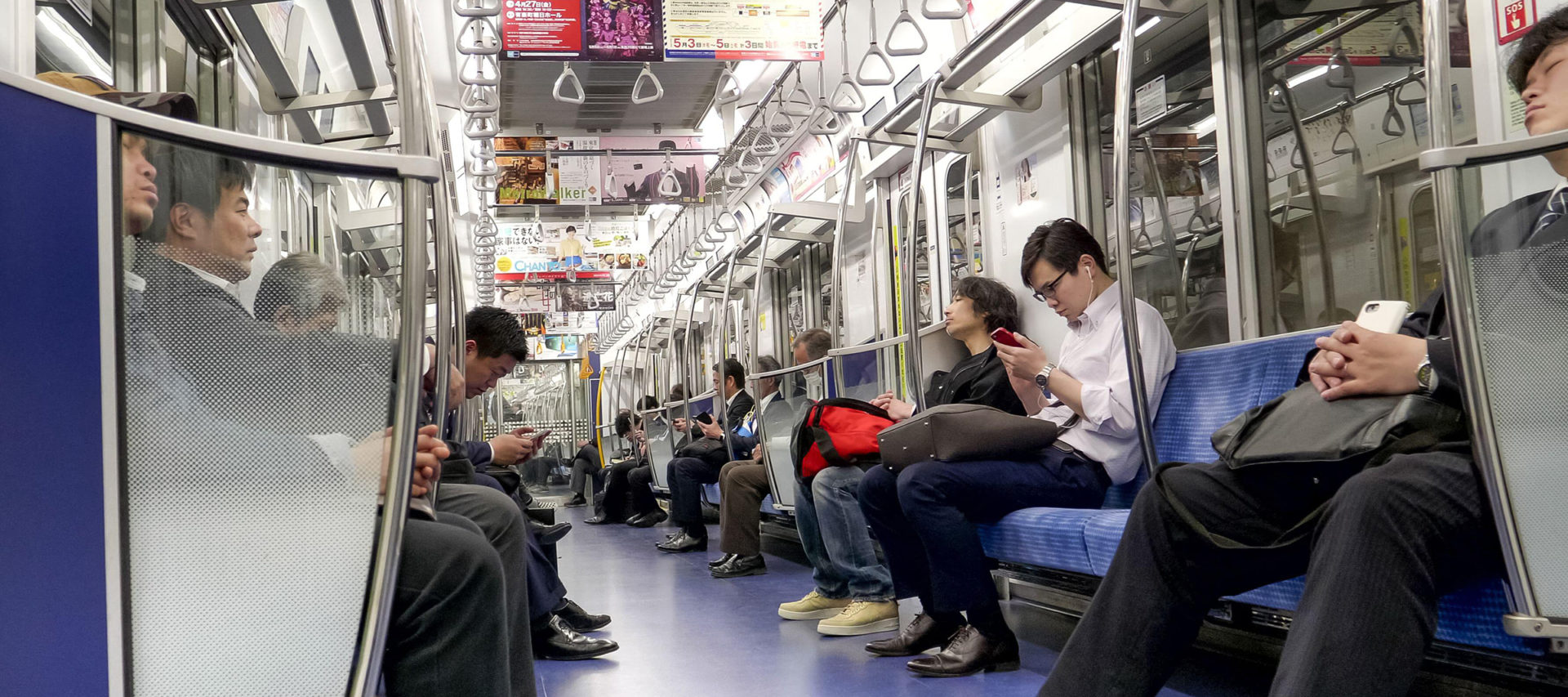
Capitalist freedom has reached its apotheosis in the age of social media. TikTok alone is rapidly approaching two billion users worldwide. If it were a country, its population would be the largest in human history — larger than China by a wide margin, almost twice the combined populations of Europe and the United States. Yet even that scale is dwarfed by Instagram, which recently surpassed three billion users globally.
With more data than any government has ever collected, these companies have developed what Han calls “smart power,” operating not through coercion but seduction. Every time a user hesitates or rewatches a video, the app responds in real time, shepherding them to one of its many “sides,” feeding them content based on massive stores of tracked behavior. And the app itself is only one side of a much larger system. Like a one-way mirror facing a detainee, it hides a network of corridors that extends across devices and websites, gathering behavioral traces to make users more predictable.
By now, we understand the basic mechanics of the profit model. While complex in one sense, its logic is painfully simple: keep users using; sell their attention to advertisers. In the early 2010s, news about predictive algorithms came as a shock. It seemed uncanny that an advertising algorithm could detect a woman’s pregnancy before anyone else knew about it. But the headlines have long since moved on. What once seemed unsettling has faded into the din of daily life, normalized under the regime Shoshana Zuboff calls “surveillance capitalism.”
When Zuboff began writing about it in 2015, the public imagination often returned to a familiar nightmare: Orwell’s Big Brother, the all-seeing avatar of the surveillance state. Zuboff argued that the comparison was misleading. Today’s most powerful surveillance systems are not instruments of the state, nor do they rule by repression. They are transnational, driven by a market logic that shapes behavior without appearing to command it — what she called “Big Other,” a diffuse computational order that monitors and modifies human action at scale.
Han had already glimpsed its logic a decade earlier in What Is Power?, writing: “What makes power more effective is not coercion but the automatism of habit. An absolute power would be one that never became apparent, never pointed to itself, one that rather blended completely into what goes without saying.” Power is strongest when it no longer feels like power to those subject to it. Or, in his formulation: “Absolute power is achieved at the point at which freedom and submission coincide completely.”
Yet Zuboff’s critique — indeed her worry — still presumes an Orwellian model of freedom. In The Age of Surveillance Capitalism, she draws on the existentialism of Jean-Paul Sartre to describe freedom as an inner sanctuary of self-determination. The central danger, then, is encroachment upon that sanctuary — the individual’s right to author his or her own life. In this picture, the self is a being whose freedom resists outside interference. What such a self actually wants is not the issue. The question, long posed by the liberal tradition, is whether a sphere of private choice can remain secure.
A better question, following Han, is whether power can shape private choice so completely that people come to desire what dominates them. Aldous Huxley suspected that power might evolve in this direction. Writing to Orwell after the publication of 1984, he commented that the book’s image of tyranny would likely prove too crude and wasteful to persist. “The lust for power,” he remarked, is more efficiently satisfied by “suggesting people into loving their servitude.” The digital world has turned Huxley’s insight into infrastructure. Feeds, autoplay, endless scroll — we live in a world of suggestions aimed at human suggestibility.
In a 2021 interview, Han observed that Orwell’s novel had climbed back onto bestseller lists. “People sense that something is wrong in our digital comfort zone,” he said. “But our society is more like Aldous Huxley’s Brave New World. In 1984, people are controlled by the threat of harm. In Brave New World, they are controlled by administering pleasure.” The result is not simply compliance, but a profound dependence on the architectures that shape our choices. “In the digital panopticon, we feel free,” Han writes. “But this feeling of freedom, wholly absent from Orwell’s surveillance state, is a problem. It stops resistance from forming.”
One obvious response is the pursuit of self-mastery. If digital domination works by getting inside the self, then freedom seems to call for a stricter watch over one’s inner life. Discipline, self-command, resistance to one’s own impulses: in a word, Stoicism — now back in fashion (literally: Elle ran an article on the trend in 2023 titled “The Rise Of Modern Stoicism: Is Keeping Calm A Healthy Option?”). Han identifies a similar turn in Foucault, whose interest in Stoic “techniques of the self” continues to attract attention. The logic is straightforward: if my subjectivity is being shaped by the system, then I must take hold of myself. I must train myself, examine myself, govern myself — possess myself — so that I might become free. The Stoic ends each day in review, asking where he gave way and where he held firm, holding no one else responsible.
Han is not convinced. Such an ethic remains enclosed in a dynamic in which the self governs and disciplines itself — a structure that mirrors the system it opposes. Self-mastery is not the opposite of burnout but one of its inner motors, turning the self into both master and slave. The pressure does not disappear; it persists in a different vocabulary, even as it carries the same feeling of freedom. Like the liberal ideal of an inner sanctuary, the Stoic model locates freedom within, protecting a zone of private choice. Both assume that freedom takes the form of a secure interior.
Han’s new book, The Tonality of Thought, approaches freedom in a different mood. Consisting of three public lectures, the book returns to themes that have run through his work for more than two decades. Han is not searching for a stronger self, but for a way beyond the self — another way of inhabiting the world, combining German Romantic ideals with Eastern thought. “If I may compare my thinking with a fruit,” he writes, “then its skin and flesh are deeply romantic. The seed, in contrast, is Far Eastern.”
In his early books on Zen, he describes the art of “dwelling nowhere.” It is not a withdrawal from the world, but a release of one’s hold on oneself. The self no longer gathers the world into a private interior, no longer encloses itself in a space of its own. What Western thought has taken for granted — the house, the oikos, a place in which I possess myself and make the world mine — begins to give way. One learns to become, as Han puts it, a guest in one’s own life. Buddhist emptiness, in this sense, is not formlessness but release: it prevents what is individual from insisting on itself. The result is not dissolution, but a different presence — a self that no longer defends an “I-am,” but lets things be.
In this clearing, Han’s thinking lets Western concepts take root differently. Among them is eros — a term that, in Greek thought, signifies much more than desire in the everyday sense. It is the soul’s movement beyond itself, toward a beauty that transcends possession. Eros reorients the reflex of self-enclosure, the habit of drawing the world inward and rendering it usable. The soul, instead of grasping, is laid hold of.
Against a Zen backdrop, this can seem difficult to place: the Western longing for beauty seems to unsettle the stillness of Buddhist detachment. Han’s books, inhabiting that tension, do not systematically resolve it. Instead, they bear its fruit in a mood that attunes us to the world. What matters for Han is that both movements, in their different ways, loosen the grip of a possessive inwardness. The question is no longer how to possess the self, but how to move beyond it.
Talk of Zen, eros, and transcendence may seem abstract, but it leads Han back to the tangible world. Over the last decade, his books have frequently described encounters with things: a jukebox in a dim shop, a garden in winter, a camera carefully handled and loved. In Praise of the Earth lingers over the work of tending plants, where care restores a sense of reality. And Close-Up in Unschärfe — still untranslated, a strange and beautiful memoir about a film he made with students in Berlin — discusses lenses, props, and lights as if they were partners in perception, not instruments to be mastered.
These episodes are not arguments so much as attunements. A piano, a jukebox, a garden — even a digital camera lens — can become what Han calls counterparts: things that either require something of us or resist easy use, drawing us out of ourselves. Counterparts are not extensions of the self but occasions for encounter. “Because we lack counterparts,” he writes, “we constantly fall back on our own ego, and this makes us worldless, that is, depressive.” Freedom, in this sense, appears only where something other than the self is allowed to stand.
The smartphone erodes freedom not because it invades our private space, but because it gives us the feel of a private world. Everything is there for me, smooth and available, ordered by likes and matches. As Han puts it in The Tonality of Thought:
Typing around, I subjugate the world to my needs. The world appears to me under the digital illusion of being totally at my disposal…. On the dating app Tinder, it degrades the Other to a sexual object. Deprived of their otherness, the Other becomes consumable…. Digitalization necessarily leads to the disappearance of the Other.
The Other is what resists smoothing, what cannot be reduced to my wants without remainder. The Other is not simply what stands outside the self, but what refuses to be absorbed into it. Zuboff’s account of surveillance capitalism still assumes the Other is a threat. For her, the danger is greatest where the self is exposed to forces outside its control, where its autonomy is compromised by intrusion. On this view, freedom depends on securing the self and its private sanctuary.
Han begins from a different premise. Freedom in the digital age is found not in resisting the Other, but where the Other resists us. It is a question of ends: does freedom secure the ego or free us from its grip? One posture is habitually on guard, the other habitually open. For Zuboff, who draws again from Sartre, the danger is plain: “Hell is other people.” For Han, the more radical danger is an “inferno of the same” in which the Other disappears.
A life organized entirely around the self — its projects, its performance, its wants — leaves no room for the kind of relations in which freedom can actually take shape. The word freedom, Han likes to note, shares a root with friend. One is not free alone. Freedom arises from vulnerability. It begins not in mastery but in exposure, where one is no longer fully one’s own.
Keep reading our
Summer 2026 issue
Sad 7-11s • Covid origins • Tech–Trad obit • Staying human • Subscribe