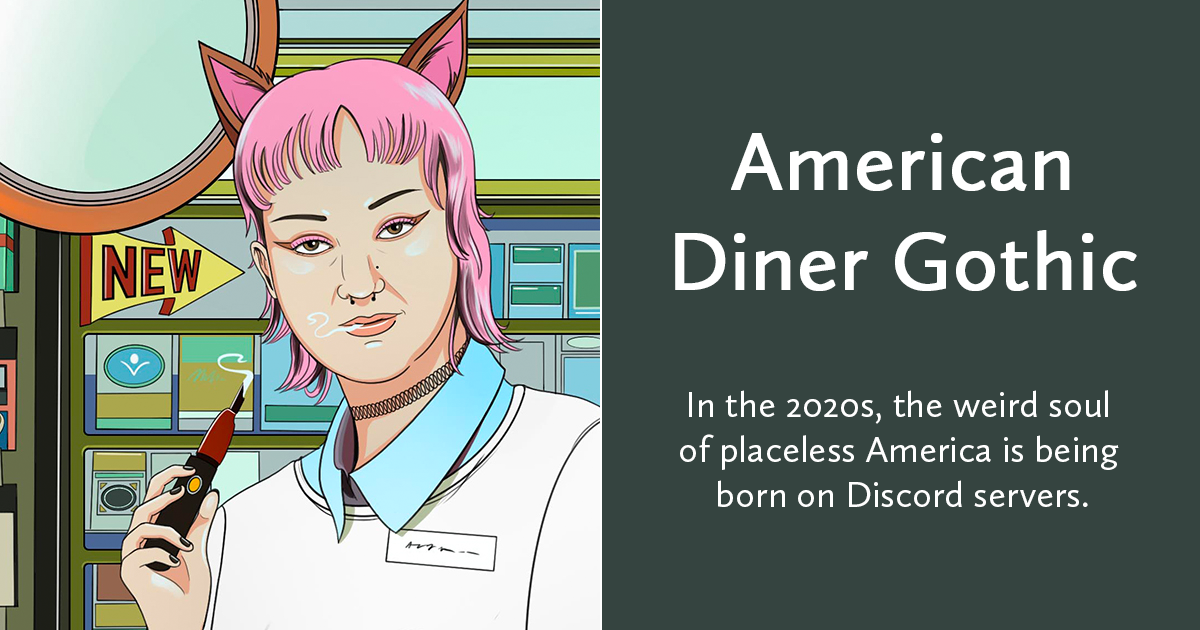
Editors’ Note: This essay is a sequel to “American Diner Gothic,” Winter 2026.
The best depiction of a dinergoth I’ve seen in media is from the most dinergoth show in the world: an American animated web series called Helluva Boss.
Its short “Mission: Weeaboo-boo” begins with a file being thrown on a desk:
Target: Emberlynn Pinkle
Location: Boring suburbs, in a boring town. Rockview USA
Description: Gothy 20 something
Emberlynn has dyed light-turquoise hair and heavy eye makeup and wears black over-the-knee stockings.
An imp named Blitzo is hired to assassinate Emberlynn due to an online fandom dispute. He climbs into her bedroom window and a scuffle ensues before Emberlynn realizes Blitzo is a demon — like in her erotic monster fantasies — and she starts treating it like a romantic drama.
The parents hear the interaction. It sounds like business as usual in the Pinkle household. “Must be watching them damn hen-tais again,” the father says, referring to anime pornography. “Why won’t she leave?!” the mother exclaims.
The short ends with Emberlynn melodramatically offering herself as a sacrifice. To her apparent delight, she’s reborn in the show’s carnival-quirky hell as a cutesy, Hot Topic–ified demon.
In a phone interview, I asked Brandon Rogers, a main creative force behind Helluva Boss and the voice of Blitzo, how much Emberlynn was a conscious roasting of the show’s fans.
“A thousand percent!” Rogers replied. “It’s a way of acknowledging, yes, we know who watches the show. And the reason why it’s parodied so well is that the people who made it are those people as well. The writers of Helluva Boss very much are like Emberlynn.”
What emerges from this four-minute short goes beyond self-roast — it’s a perfect and unwitting exploration of the dinergoth condition. The Emberlynn Pinkles of the world live among the mythic deadness of Fort Smith or Fort Worth or Fort Wayne. Their “boring town” Rockview could be Rockford or Rockville or Rockwall. Illinois and Maryland and Texas are now all the same place with the same accent but different weather. It’s all one disenchanted world where even the masses have grown ashamed of religious and national myths.
The American history of the town and suburb ended when neighbors became anonymous, and the Internet rushed in to light up the faildaughter’s bedroom.
An Emmy magazine cover from 2023 perfectly captured the dinergoth aesthetic revolution. There was Charlie Morningstar, protagonist of the animated series Hazbin Hotel, surrounded by characters whose eyes Rogers described to me as “ping pong balls with black dots in the center.” The other animation characters — from Bob’s Burgers, The Great North, and shows I couldn’t even distinguish — shared the same visual language: emotionally deadpan, almost intentionally ugly, signaling that they’re too ironic and cool to look pleasant.
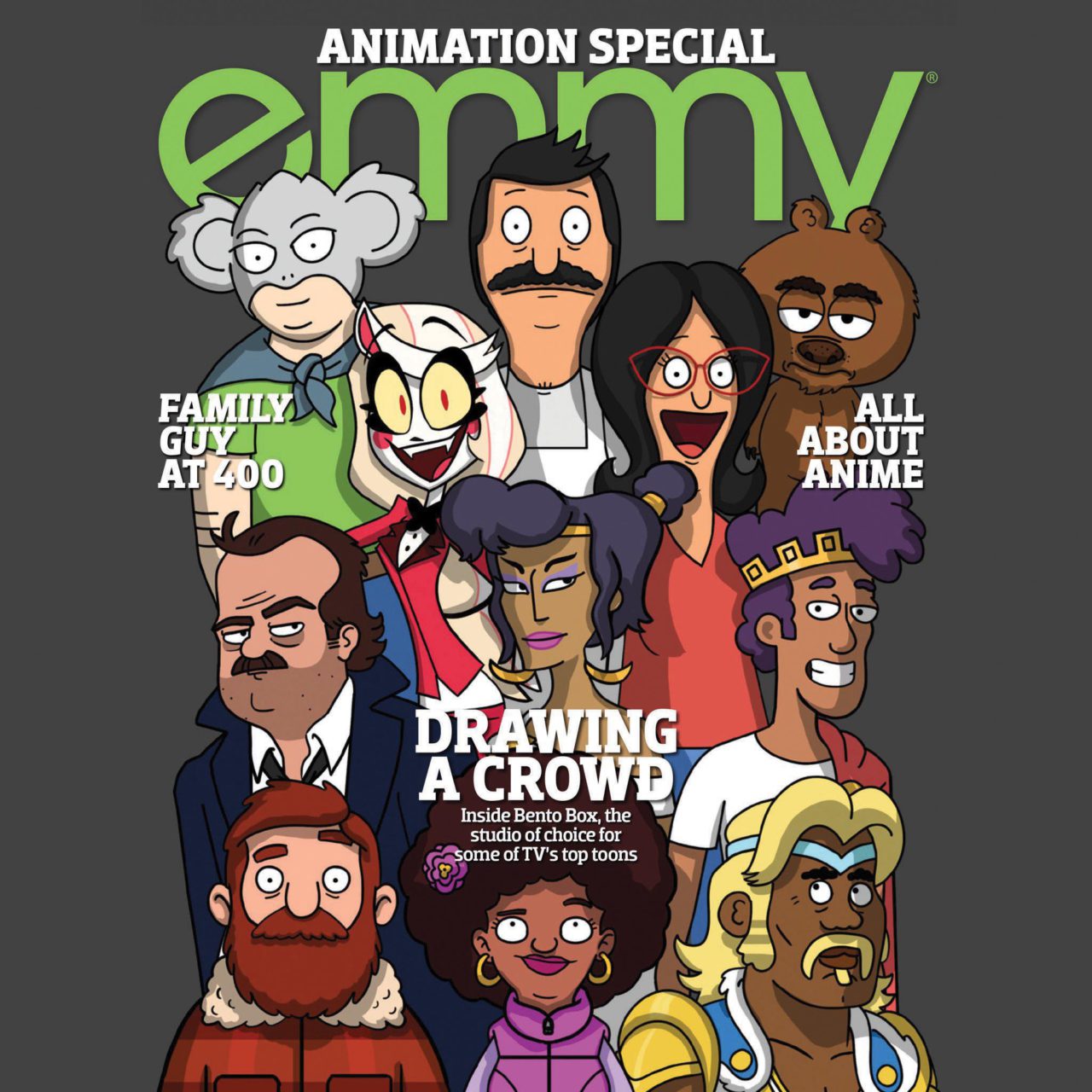
Charlie Morningstar, on the other hand, exploded off the page: a riot of color, a huge fanged grin, like something teleported in from another universe entirely.
“That blew my mind,” Rogers told me when I brought up the magazine cover. The contrast was so stark it shocked even him. “You know what I’m looking at when I see this? I’m seeing a bunch of cartoon characters that were made for a television show to get lots of numbers and to appease executives.”
He wasn’t wrong. These other characters looked like they’d been designed by committee to be inoffensive and ironic — animated thumbs that could sell ad space. “They all look like they were made to sell a pilot to a network,” Rogers said. “These characters all look like they were designed to be, like, ‘you get it, right? You’ve seen this type of animation.’”
But Charlie was different. “Helluva Boss and Hazbin Hotel” — sister shows with the same creator — “never had that objective,” Rogers explained. “Look at Charlie — no f**** were given what the general audience would think of this character. She was made to look good. That’s the bottom line. She wasn’t made to win over executives. She was made to just be — good.”
This is Tumblr energy unleashed, all the aesthetics that lived on the Internet’s edge in the 2010s breaking into the center of the 2020s. When I suggested it looked like someone’s OCs — Original Characters, in fandom speak — Rogers immediately agreed: “Exactly. Something that someone made of love and not for greed.”
The dinergoth aesthetic had made the cover of Emmy magazine. The revolution was complete.
In our half-hour interview, Rogers used the words “neurodivergent” or “neurotypical” a combined thirteen times. The frequency wasn’t performative — it flowed naturally as he discussed his audience, his writers, himself.
“The environment you described is where they grow and breed,” Rogers said, referring to the placeless suburbia I’d outlined. “It’s like damp places for mold and roaches.”
The metaphor is deliberately unglamorous — mold and roaches, organisms that thrive in neglect. But Rogers quickly reframes this growth as alchemical: “Speaking from experience, I come from exactly the town that you’re talking about, raised by neurotypical authorities. And that kind of a pressure cooker only creates these diamonds of extremely creative people who long for a world more complicated and greater than the Edward Scissorhands suburb that many of us grow up in.”
Rogers’s description of his own suffocation in these environments turns visceral: “I very much grew up in a very neurotypical environment. I wanted to claw my f***ing brain out of my skull.”
“These people, not only do they see shows like this and latch onto them, but it’s almost like the Internet is a safe haven of possibly the only media that they identify with or people they identify with,” he said.
In recent years, this digital refuge has bled into physical reality. “Growing up I didn’t have anyone that I could really relate to,” Rogers told me. “And then next thing I know, I’m going to these cons [conventions] where there’s hundreds and hundreds of people in front of me who all relate to me and whom I relate to.”
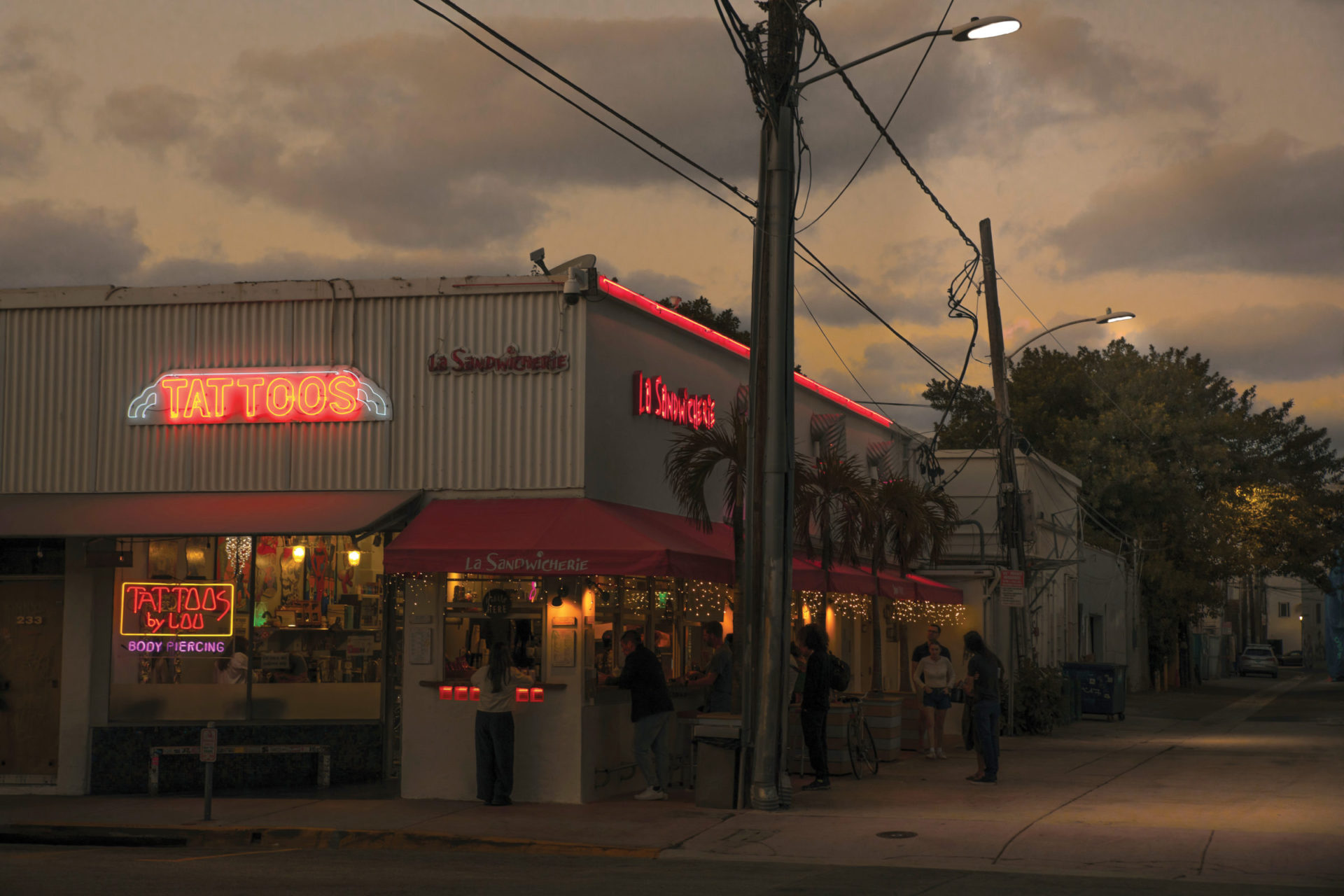
Anime conventions are dinergoth central, and their explosive growth tells the story of this culture’s mainstreaming. The 2024 Anime Expo alone had a turnstile attendance of 407,000, but that’s just one of dozens of massive “cons” across America. Convention attendance is no longer just a niche hobby.
Earlier this year, I attended one of these major anime conventions — not as a journalistic voyeur (and some identifying details about the people described in this article have been changed to protect them*) but as a real participant. Putting effort into my cosplay is some of the dinergoth microplastic in my system.
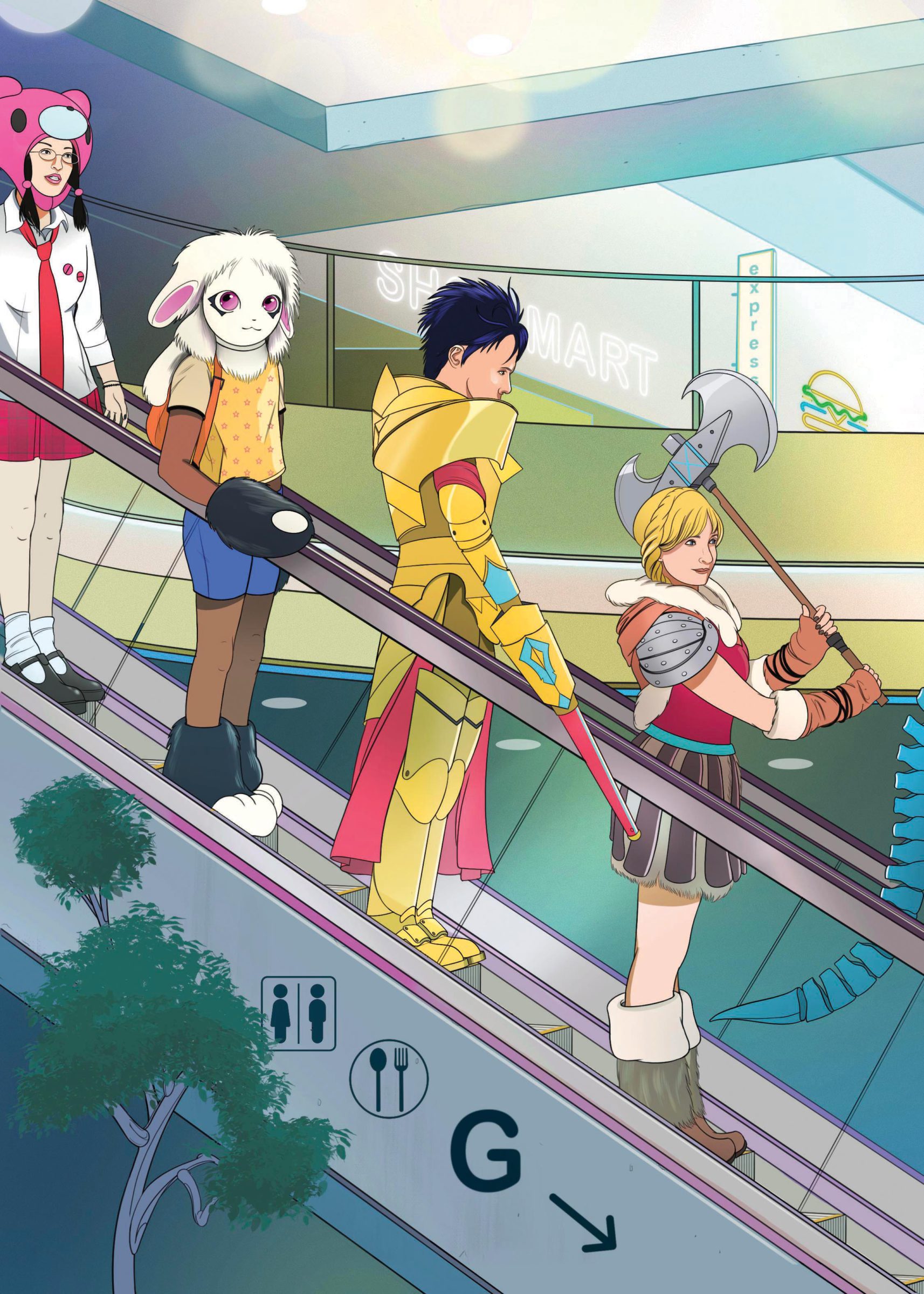
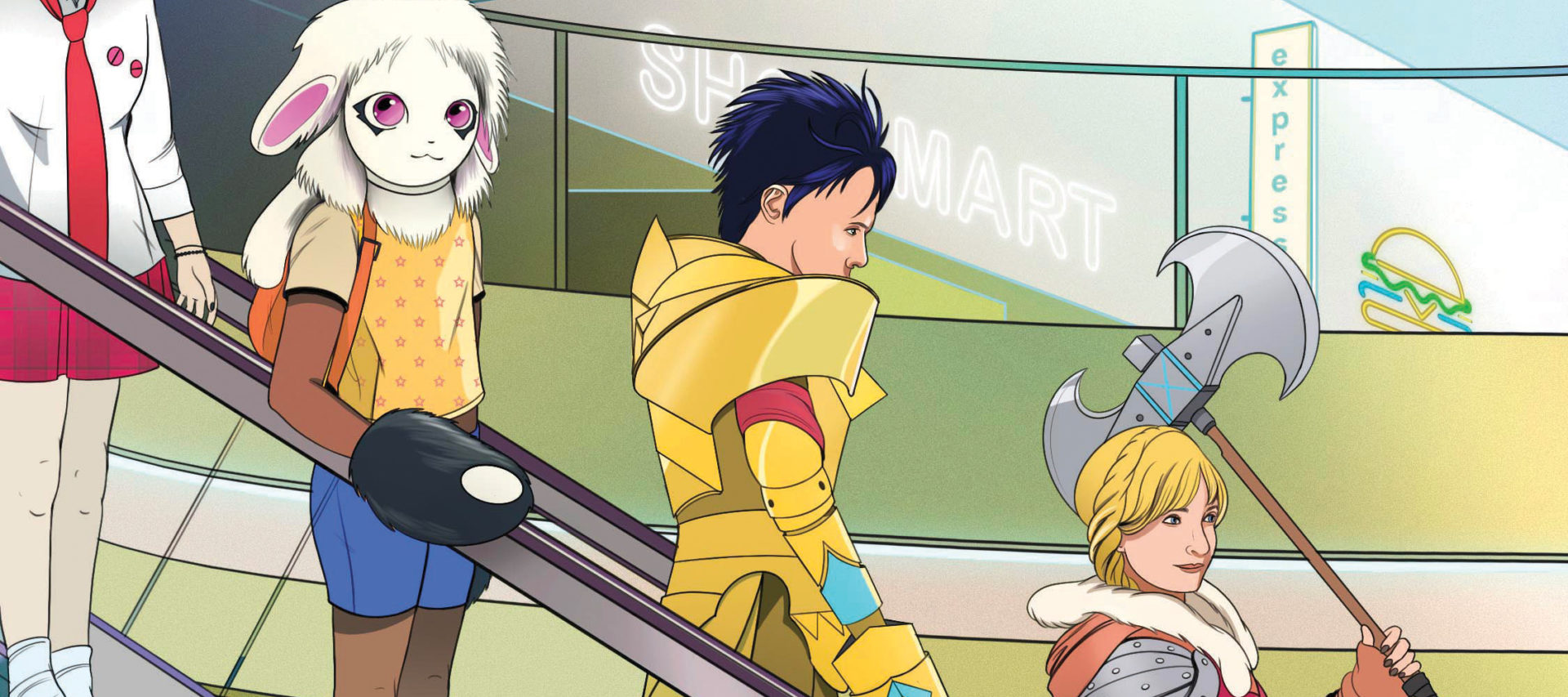
Most attendees were in costume — you’re not really participating if you aren’t cosplaying. These events aren’t just about anime anymore, but fan culture in general. People dress up as characters from any sort of popular media, from TV shows to video games to cartoons. Aesthetic remixing was visible all around: gender-swapped versions of characters, sexy versions, tough masculine characters in anime dresses. Some cosplayers created “goth variants” or simply “me variants” with their heavy eyeliner on and snake-bite piercings kept in. There were many transgender people. I noticed a curious profusion of twenty-year-old women who inexplicably walked with canes. Almost every woman I spoke to at length mentioned, unprompted, that she was on the autism spectrum. The men were less forthcoming.
One woman who was flirting with me turned out to be there with one of her partners. She’d attend the next day in a different costume and with a different partner.
There is no talking about dinergoths without talking about sex. Their sexuality tends toward casualness. They are sexually haunted, sexually dreaming, sexually comfortable, sexually yearning. Even when they aren’t promiscuous individually, promiscuity and queerness are the background radiation of the dinergoth mind. Fan art and original characters almost always carry a pornographic undercurrent, and con culture has an active problem of where to draw the line on just how slutty cosplayers can dress. This is the unconscious endpoint of sexual liberation, where kink and queerness are casual and normal — no longer the province of urban bohemians.
At the con, displays of romantic chaos were everywhere. One woman trauma-dumped that her dating history was entirely with men she met on Discord. Another had left her husband and was planning to move to New Zealand to live with a trans woman she’d met on a forum.
There were a few potential relationships with enormous age gaps — some might have simply been family — but I could verify only one. While standing in line, I saw what I initially took for a sweet mother–son coordinated cosplay: she was 60-ish, he was around 30. Later I found that I misread the situation when I saw the couple sitting with legs interlocked.
This is not to say that dinergoths are all promiscuous freaks — they aren’t, and an outsize number of them identify as asexual. The point is that sexual chaos is structural to the dinergoth condition. Middle-class sexual norms of monogamy were underpinned by survival and prosperity values: to protect property and inheritance, and to commit yourself to a social contract that secures a physical community’s progress. When you’re not guaranteed your parents’ economic trajectory, and your community is distributed online rather than in a neighborhood, those virtues become meaningless.
Dinergoth sexuality isn’t “liberated” — that implies there is something to escape. It’s post-liberation. They inherited a world where boundaries already collapsed, so they’re just vibing in the ruins.
When I asked Rogers if there was a connection between neurodivergence and hypersexuality, he was emphatic: “Oh, a thousand percent, one thousand percent.”
He elaborated that there’s a stigma that neurodivergent people aren’t sexually expressive, and suggested that even the opposite is true. “I can say firsthand looking at them at the cons, talking to hundreds of them every weekend. No matter who our fan base is, who the person is mentally, the spiciness of their sexuality is unhinged.”
Helluva Boss rejects respectability entirely. The show exists in a world where the middle-class consensus has collapsed and polite society does not exist. It’s trashy and tacky and the show embraces that as being half the point.
“It’s nice to just be able to wave your freak flag at the highest level possible,” Rogers said. “Being overtly, confidently sexual, outwardly sexual as a queer person, there’s not a lot of platforms where that’s praised and welcomed.”
The creators aren’t even the most extreme part of this ecosystem. “I like to think that I write pretty raunchy humor, but then I meet our fan base and they’re worse than I am,” Rogers laughed. “Most of our fans will take our characters and dress as a sexier version of them when they go to a con.”
The most striking thing is that, violence, swearing, sex, and plotting aside, Helluva Boss looks and sounds like a kids’ show. The art is meant to be lovable and interesting rather than ironically detached. The rich sound cues of xylophones and whooshes are cartoonish in ways that aren’t found in primetime Fox animation. Its musical numbers are far closer in DNA to those found in Disney movies than in Family Guy. This necessitates a warning in the beginning of the YouTube-hosted show, cautioning about the mature content and “rampant demon horniness.”
The world of Helluva Boss has flavor that has since been drained from the world we have left. Regional American accents are featured affectionately and are cartoonishly exaggerated: the New Yorkers sound like mid-20th-century wiseguys and the country people sound like lovable hicks. These were our grandparents’ accents, which now have mythic weight in a post-accent America.
It’s a show that anticipates its own fandom because its creators are the fandom. They made their own original characters to put them into relationships with each other and just made a show out of it. “We’re writing for our fans because we are them. We are those kinds of people,” Rogers explained. “We are our fans. We are writing for the people who are us, which thanks to conventions and thanks to the Internet, we’re realizing is a much larger army than we initially thought.”
Helluva Boss was picked up by Amazon Prime for two new seasons in mid-2025. Its success was as inevitable as it was unlikely. It thrived because it was exactly what an underserved Internet audience wanted: a fandom-rich, edgy, alternative animated series with strong character appeal. Its aesthetic is simply dinergoth — cute in an emo-goth-Tumblr way, designed to be fallen in love with.
The dinergoths aren’t doing elevated queer theory, they’re doing Helluva Boss: hypersexual demon romance presented with the aesthetic sophistication of a DeviantArt page. It’s queerness stripped of all bohemian pretension, processed through Rule 34 and gamer culture.
They represent the tragedy of our deterritorialized age, the inglorious end of the traditional social fabric. But it’s also the triumph of the avant-garde dreamer’s expressive values. The dinergoth condition represents both endings at once: the collapse of place-based meaning and the birth of pure expression unmoored from geography and class.
When Helluva Boss’s Emberlynn is damned to the underworld, it was really her liberation. She was already half-severed from our world, living in the hypersexual, hyper-aestheticized dreamscape of online. She’s never going to grow up to become her parents because she can’t. The middle-class bargain — act respectable, become well-off — is broken. Respectability buys nothing.
Oh, well. Time for chaos and anime.
* Editor’s note: This disclosure was added after the article’s initial publication, as were some identifying details.
Exhausted by science and tech debates that go nowhere?