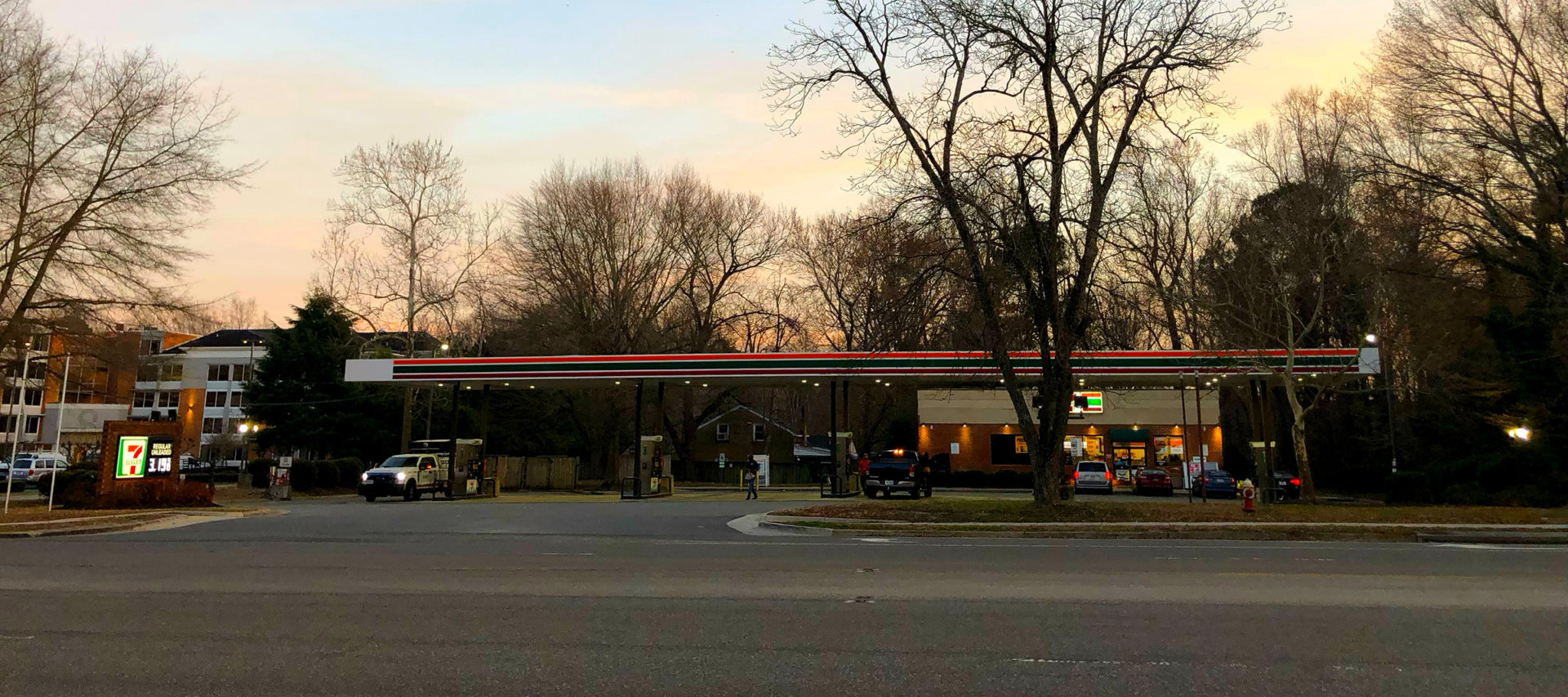
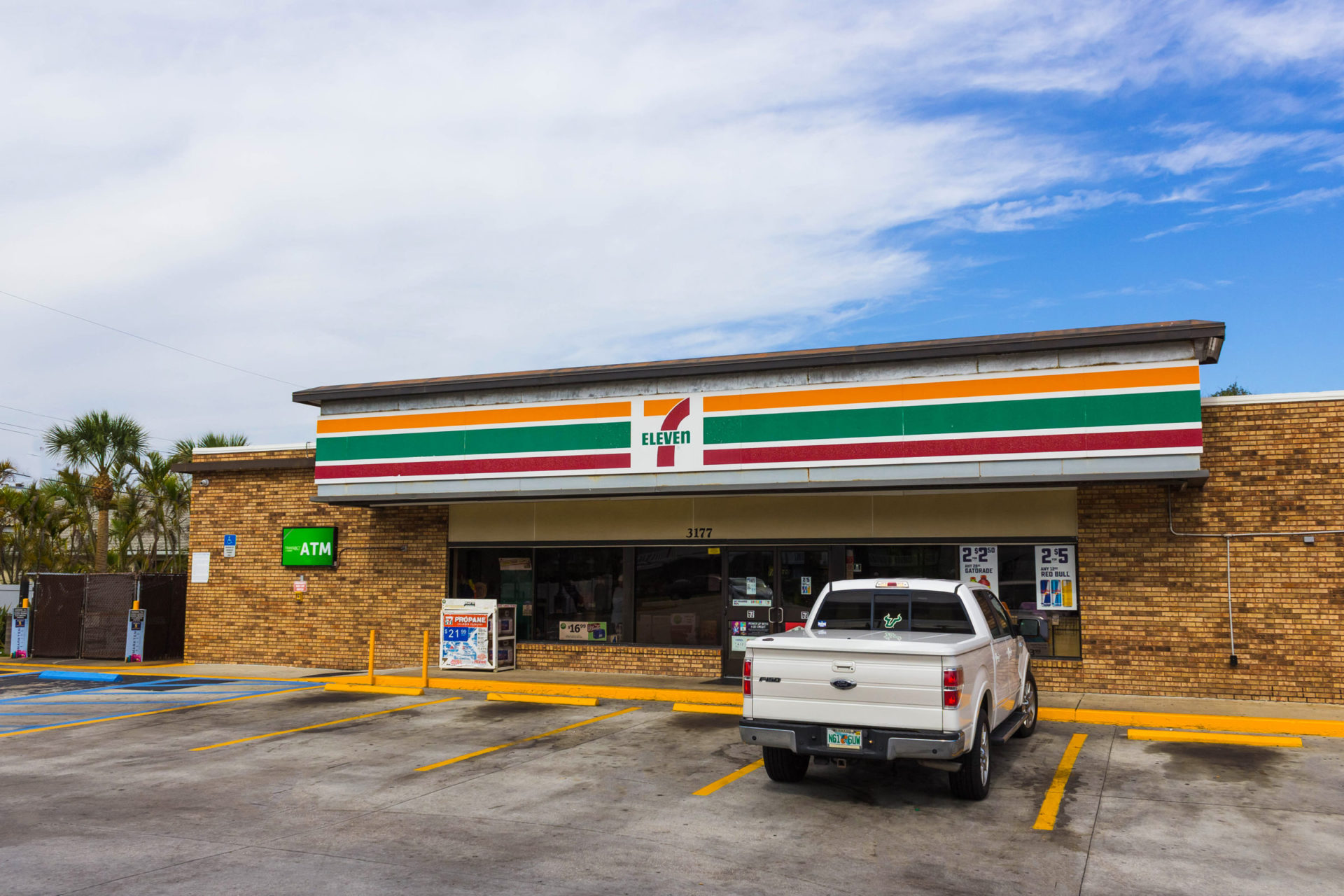
You are probably one of the landlords of this 7-Eleven in Williamsburg, Virginia. Do you care about how it looks? How it fits into the landscape? Of course not, since you did not know it existed. Also, it’s apparent from looking at it that no one else particularly cares.
It’s located on a classic “stroad” — that is, not quite a highway but also not a street of the kind that would allow for walking from place to place. One would not normally walk anywhere to or from this 7-Eleven. The 7-Eleven is surrounded by chain hotels that are only accessible by car and have nothing distinctive or memorable about them. Also nearby are a bank branch and a weed dispensary, and behind it is a single-family housing subdivision, all nondescript. It’s nowhere in particular. The landscape is laid out without much intention. No one would have designed it to be so boring and faceless.
You would not have. And yet, you likely had a hand in it, passively, as a part owner of this 7-Eleven.
This building and the land it sits on are not owned by 7-Eleven, or by an individual. Instead, this 7-Eleven is the tenant of a real estate investment trust, a financial structure that allows huge numbers of people to invest in real estate without having to worry about the details of what it is they are investing in. That trust, named Agree Realty Corporation, also owns the properties for a dialysis center in Hilo, Hawaii, a PetSmart in Port Arthur, Texas, a grocery store in Augusta, Maine, and nearly 3,000 other retail properties spread across all fifty states. It’s located in Royal Oak, Michigan.
Agree Realty Corporation, in turn, is about one-eighth owned by Vanguard, whose diversified funds of trillions of dollars in assets are bought into by tens of millions of investors, including through 401(k)s and other ubiquitous savings vehicles. If you have such a retirement plan or market account, it’s quite likely you have a piece of the 416 Bypass Road 7-Eleven.
It is unfair to single out this location. There are thousands just like it. And that is the point: it is interchangeable. That quality is an advantage for its marketability as a financial product — but it is a problem for the character of its neighborhood, or lack thereof.
It exemplifies a shortfall of American urban design, namely that the system of property ownership has created too much distance between the owners of a given plot of land and the families who live and work around it.
“That enormous amount of separation leads to tons of qualitative issues and really leads to a lot of commodification,” Ward Davis, a founding partner of an Arkansas real estate company focused on traditional-style development, told me in a phone interview.
The U.S. has separated landowners from neighborhoods through regulations and tax laws meant to make real estate markets accessible and liquid — that is, easily bought and sold among investors. These rules and regulations have worked for their intended purposes. They have successfully turned much of the built environment into commodities, which are easy for buyers and sellers to understand, price, and transact. They have made it possible for teachers in Ontario, policemen in Los Angeles, sheikhs in Dubai, and millions of others to finance the convenience stores, houses, hospitals, hotels, malls, and offices that Americans frequent every day. All kinds of people get access to a powerful investment vehicle, while builders get access to a vast pool of financing.
But there has been a cost. Commodities aren’t lovable.
All the qualities that give a place charm or loveliness are ones that are best stewarded by people who live there. Someone who owns the plot from afar, without even visiting, can never understand the subtle details that give it life. And the middleman property developer or manager just will never care.
No one will ever cherish a plot of land as much as someone who has a long-term ownership and residence interest in it. Yet more and more of the built environment we live in every day is owned by people far away who don’t even know they own it.
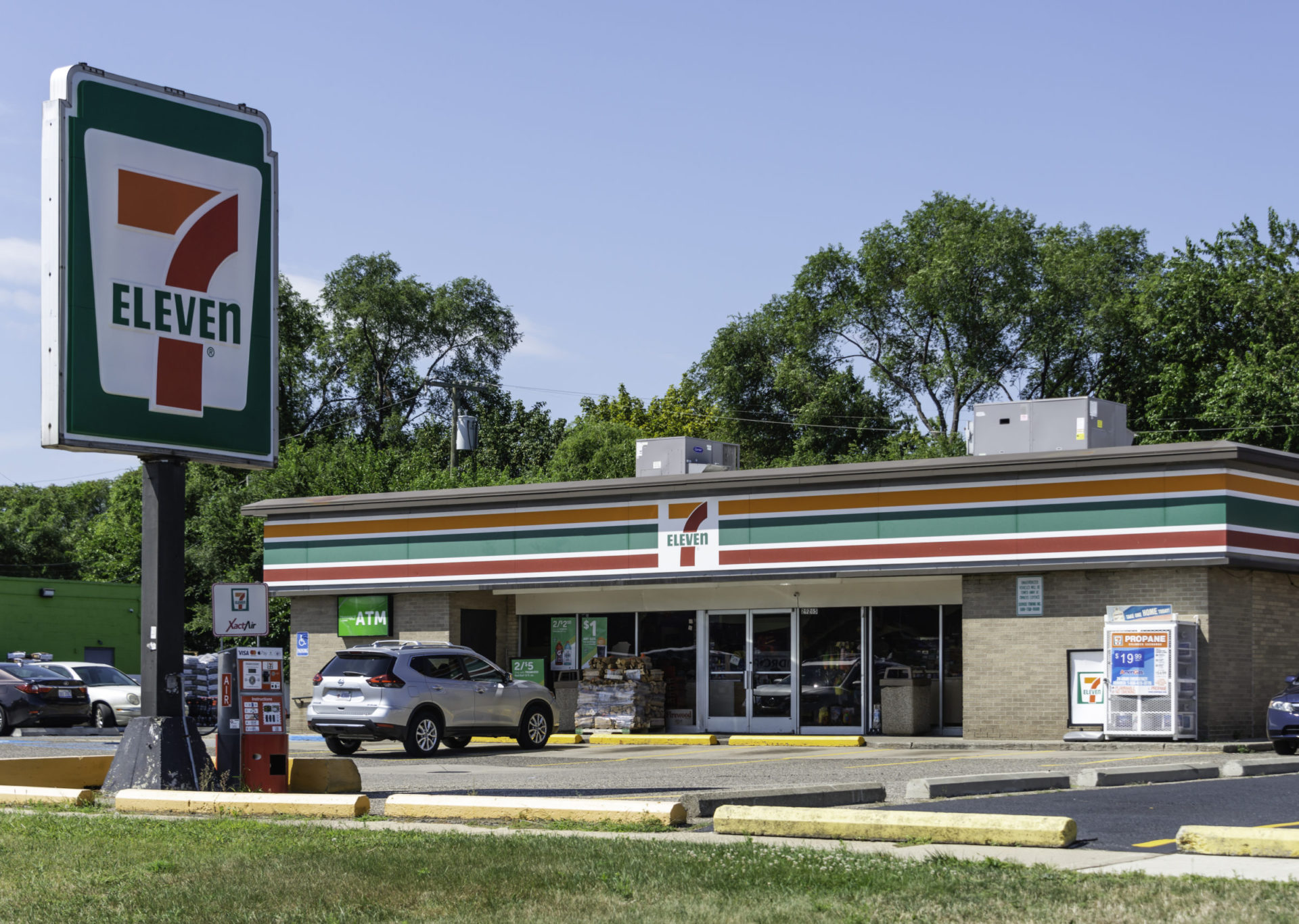
The relationship between the land and its owners wasn’t always this way. Nor is it this way in other places.
Take the classic British village as depicted in Downton Abbey, which gripped large audiences in part because of the strong sense of place and belonging it evoked.
The plot of the show is driven by the problem of who will become the property’s future owner: Downton Abbey is set to pass to a remote relative because of property laws, developed over the course of centuries, that ensured that estates not only stayed within the family but specifically passed on to a male heir. The family’s efforts to keep control of the manor and village, despite the lack of a son, lead to all the adventures that follow.
Under this medieval system of ownership, generally known as fee tail, the house and surrounding town had a special relationship to the noble family who claimed it. Not only did they generally own the land, but they expected it to remain in their family for generations to come. The physical layout of the town to a large extent reflected their family’s influence. Thus English nobility had a strong interest in not just the functionality but also the beauty of their family village. The look of Downton, with its church, post office, pubs, market, and houses all within walking distance of the manor, is the classic English layout.
The downsides of the law were that it would be difficult or impossible for English lords to sell off the land — and also hard to finance improvements on it, since the land could not be used as collateral. Land-use laws, such as zoning or environmental laws, would be minimal. Yet in the absence of modern planning, these villages that dot the English landscape evolved to a form of beauty we find hard to replicate today.
The United States has always had more liberal property laws. Fee tail ownership was abolished early on. Instead, the U.S. generally has had a system of ownership known as fee simple, which essentially means that owners have an absolute right to use or sell their property as they see fit.
But in the early days of the colonies and the republic, there was still a strong connection between the owners of land and the residents. Most of the East Coast’s charming neighborhoods were built in that era. For example, the street known as Captains Row in Virginia’s Old Town Alexandria is a tourist destination. Visitors flock to the cobblestone streets and rowhouses, just steps from restaurants and cafés in brick buildings that date to the time of George Washington, to have engagement or wedding photos taken.
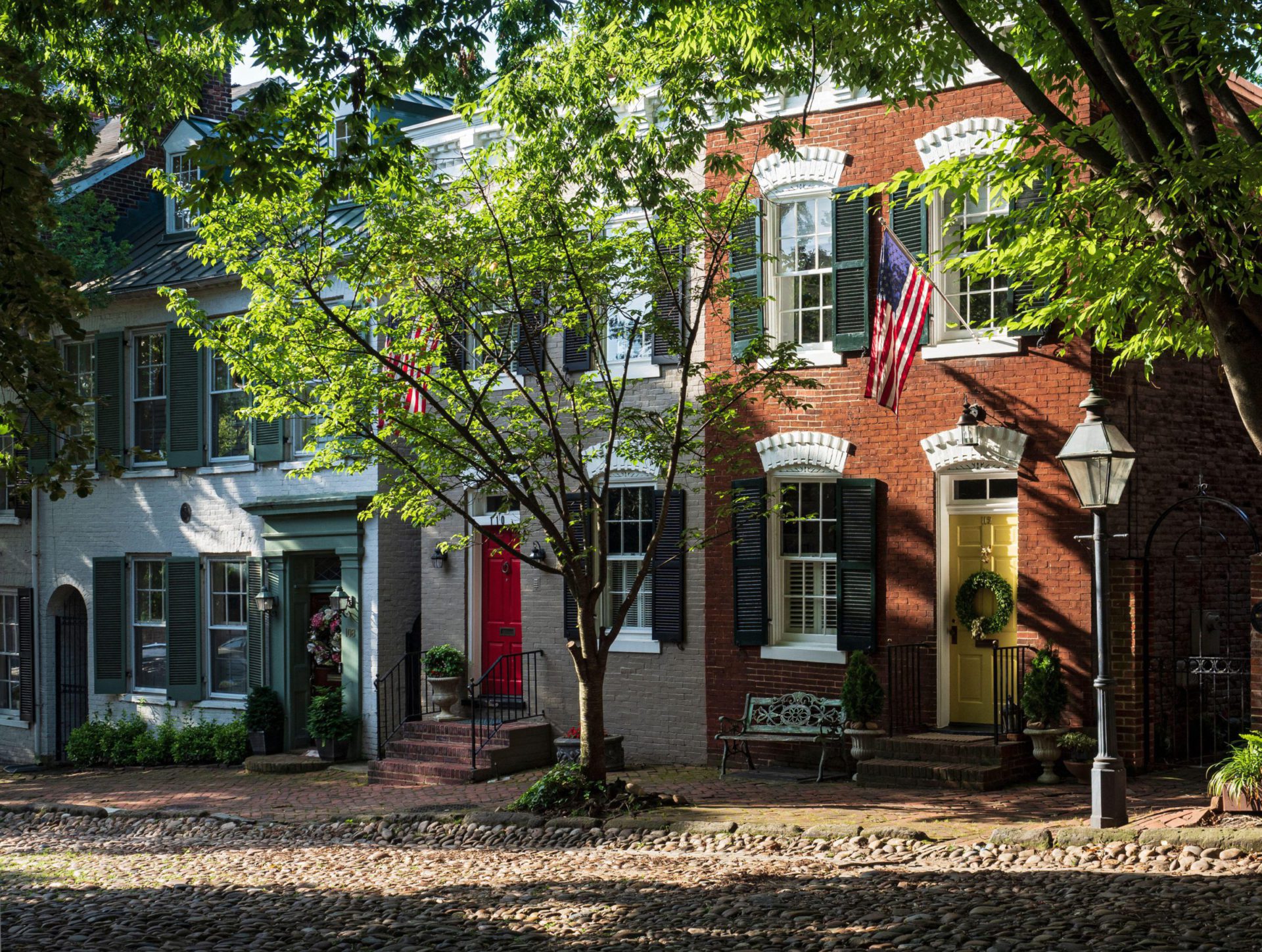
Captains Row is so named because it was built and financed by the boat captains who lived there and made their livings shipping goods (and slaves) in and out of the port of Alexandria. The captains didn’t have planning degrees or access to today’s star architects. They also weren’t constrained by the zoning laws and building codes that now govern Alexandria and the U.S. But they somehow managed to create a street and neighborhood that is one of the loveliest in the country.
What makes a neighborhood or place inviting or charming is not necessarily expert design and planning. It’s not even aesthetic merit. Instead, it is a variety or density of features that can be appreciated by people on foot. It is an attention to detail at the level of the individual building.
“If you had to pick one thing you could do to make human settlement more walkable, it would be to build small,” Emily Talen, a researcher at the University of Chicago and the author of Neighborhood, said in a phone interview.
Take, for example, the lively neighborhoods of modern Tokyo. Many buildings individually lack architectural value, in that they are the kinds of concrete and steel blocks that critics often bemoan in other settings. But because Japan has a combination of zoning and highly adaptable ownership, it has created settings where blocks often feature retail, restaurants, convenience stores, and everything else right near or below residences. You might not agree with the aesthetic choices made on each block, which might appear garish to some Western eyes. But there is no denying that they are interesting — and that at least they are choices, made by someone.
Property and land-use laws have an overriding influence on such outcomes. What casual observers, or even real estate industry participants, might ascribe to culture or design are in fact often the result of policy choices.
Another example that shows this point clearly, from the opposite direction, is the famed ‘ashwa’iyyat of Cairo — brown and gray near-uniform multi-story apartment buildings that stretch out from the Nile over distances shocking to most Westerners, housing millions of people.
Egypt has weak property rights. Only a small share of properties are registered, and a World War II-era rent control law pushed construction out of the formal sector for generations, forcing it onto the margins as people — illegally and incrementally — bought land from farm owners and converted it to housing.
The lack of property rights means that families cannot get mortgages to finance homes. Instead, they build them piecemeal, as savings allow. The shortage of rain makes it possible for homes to be built in a cheap way over time, uncovered, using inexpensive materials. They often must be built in stealth to avoid the government blocking construction. All these factors lead to a certain uniformity.
At the same time, the fact that families own the developments directly means that there is thought put into them. As the urban planner David Sims writes in Understanding Cairo, an earthquake in 1992 saw relatively few collapses among these buildings. And although they are often described as “slums,” they are actually relatively decent housing, by United Nations standards — very few of them are characterized by the deprivations seen in slums elsewhere in Africa or Asia. The streets, too, although monotonously gray from the outside, often are host to a surprising amount of city life, with shops, small eateries, and small-scale retail available to the apartment dwellers above. Likewise, there is a surprising amount of family life on the streets.
The modern American urban form is shaped by a combination of extremely strong property rights and regulatory regimes at the state and local level that tilt the playing field toward large development.
At the local level, landscapes are shaped by Euclidean zoning — that is, zoning that separates uses — so called because of the 1926 Supreme Court case Euclid v. Ambler that sanctioned zoning as a legitimate power of states. Developers agree that local zoning and other land use laws are the dominant factor that shapes what neighborhoods look like, as they effectively ban traditional neighborhoods by prohibiting projects that combine retail, commercial, and residential uses — also known as mixed-use development.
At the federal level, regulations and tax laws favor large firms that can pour massive investments into the single-use, large-lot molds created by the local land use laws.
This framework helps strip plots of their local context and make them legible as investments. Every real estate investment involves what is known as a “capital stack,” which is the combination of debt and equity used to finance the construction and then maintenance of the project.
On the debt side, a range of credit programs, regulations, and tax rules make it easy to finance large single-family home tracts or single-use developments, and relatively difficult for developers of traditional neighborhoods to get loans. (See the previous article in this series: “The Demise of Real Neighborhoods Is a Story of Finance,” Spring 2026.)
Similarly, on the equity side, the laws and regulations have developed over the years to give an advantage to large investment vehicles, such as real estate investment trusts, private equity firms, pension funds, and insurers. The federal government has helped make property ownership easily legible and liquid for investors who have no connection to the land.
Together, those rules create a market structure that allows buildings to serve as industrial-scale investment products — in other words, the opposite of the small-scale ownership dynamic that leads to interesting lot-by-lot development.
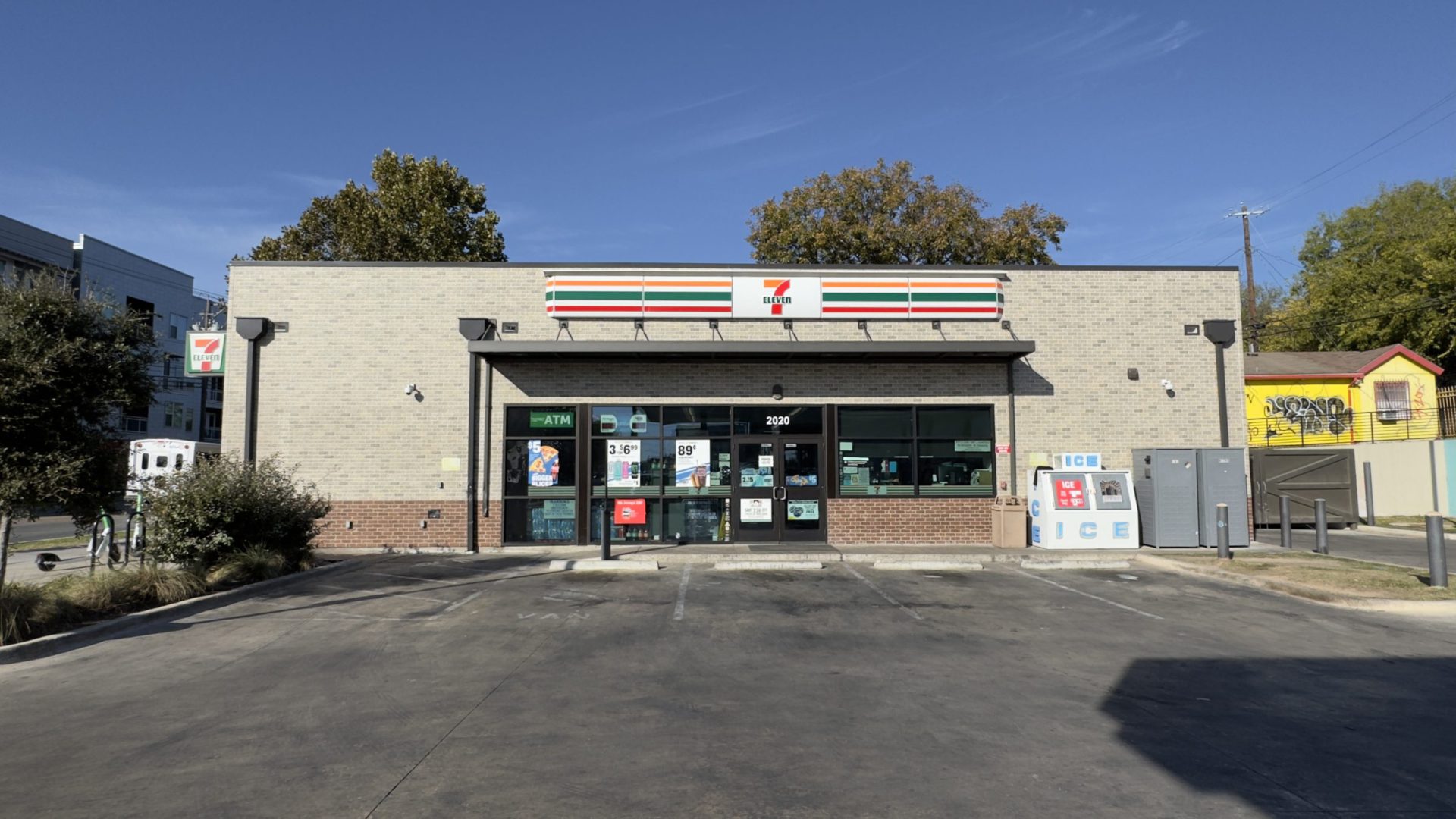
To understand this dynamic, it is helpful to go back to the 7-Eleven, the real estate product that is ubiquitous in the U.S. and has been most optimized to take advantage of real estate laws.
A 7-Eleven is a highly desirable tenant because it can often be signed to what is known as a triple-net-lease, meaning a lease structure in which the tenant pays for insurance, maintenance, and taxes. The landlord simply collects a rent check and otherwise doesn’t worry about the property. 7-Eleven is also a “credit tenant” — that is, a large corporation with investment-grade credit that the landlord likewise doesn’t have to worry about.
So a 7-Eleven is a perfect opportunity for a real estate investment trust (also known as a REIT, pronounced “reet”), an investment vehicle that allows many investors to pool resources together to buy real estate. 7-Eleven is a tenant that can be easily reduced to a single number that sums up its financial value, such as a net present value, a price per square foot, or a capitalization rate (a measure of expected return on investment, also known as a “cap rate”).
The 7-Eleven fits well within the Euclidean scheme, where zoning separates areas into single uses. It can easily be placed in the commercial-zoned district along Bypass Road in Williamsburg, for instance, where housing is not permitted.
The separation of uses is helpful for REITs because it makes it easier to analyze properties by type and present them to investors as a product. Thus the owner of the Williamsburg 7-Eleven property, Agree Realty, specializes in triple-net leasing. Other REITs offer products that generally align with particular zoning categories. There are REITs that specialize in single-family rentals, hotels, malls, shopping centers, offices, hospitals, and even cannabis.
Specialized REITs are helpful to institutional investors, such as pension funds or insurers, who need to diversify into real estate. They can essentially pick from a menu of asset classes in which they can invest at a massive scale.
“This specialization gets further refined to present institutional investors with criteria that are intended to mitigate risk,” John Anderson, a developer focused on traditional neighborhood design, wrote in an email. “For example, there is data indicating that apartment properties with on-site management perform better than properties without an on-site manager. The threshold for how many apartments are needed to support on-site staff vary from market to market, but 125 to 150 units is the threshold range.”
The advantage of the REIT is that it allows for the democratization of real estate ownership, much as mutual funds do for corporate stocks. For most families, owning real estate (apart from their own home) would be too onerous administratively. Few have the time or wherewithal — or the funding — to carry out all the tasks associated with being a landlord, such as acquiring property, building the structure, collecting rent, performing maintenance, and so on.
The REIT provides individuals the financial benefits of real estate ownership without the costs associated with being a landlord. But it promotes real estate development at an industrial scale, rather than the lot-by-lot scale that facilitates neighborhood life.
The playing field is tilted in favor of REITs thanks to the tax code. Unlike business proceeds, which are taxed twice — once at the corporate level and then again when dividends are distributed to individuals — REIT income is not taxed at the corporate level as long as it satisfies certain constraints, namely that it distributes the vast majority of its income to owners. REIT income also gets a 20 percent tax break through the Trump tax cuts. Over the years, the rules applying to REITs have been liberalized, allowing them to become essentially massive landlords.
So REITs produce a steady stream of tax-privileged income for owners. They allow individuals to invest in 7-Elevens as a concept without having to trouble themselves with the workings of the industry or even know where the convenience stores are located.
“Philosophically it’s really a bad model to have investment be so detached from what it is you’re building,” Emily Talen, the Neighborhood author, told me.
U.S. REITs own $4.5 trillion of real estate, according to an industry study, or about a fifth or a sixth of all commercial real estate. But REITs disproportionately shape the built environment because they own many of the buildings that leave the biggest mark on the landscape. They own nearly 2,700 shopping centers, 8,500 medical facilities, and more than 200 regional malls, according to the industry.
One such mall owned by a REIT is Tysons Corner Center in Virginia, about 45 minutes outside Washington, D.C.
The regional mall is the tentpole around which the surrounding community has grown, making Tysons Corner the ultimate example of an “edge city,” a major center of business activity outside a traditional city center. It is a place that is built to fit the mold created by modern land use laws.
Tysons was little more than a rural crossroads before the 1960s, when Fairfax County decided to transform it into a retail and commercial destination to match the plans for the Capital Beltway being built nearby. It was intended to be an easy destination to reach by car, in line with the general postwar thinking that traditional downtowns had to give way to places more accessible by highway.
The centerpiece is Tysons Corner Center, today the eighth largest mall in the country, and one of the largest sub-city-sized markets for office space. It is half-owned by the Alaska Permanent Fund, which is the state-owned corporation that invests oil revenue on behalf of Alaska’s citizens, and half-owned by Macerich, a giant REIT, which is in turn owned by hundreds of large institutional investors and many individuals.
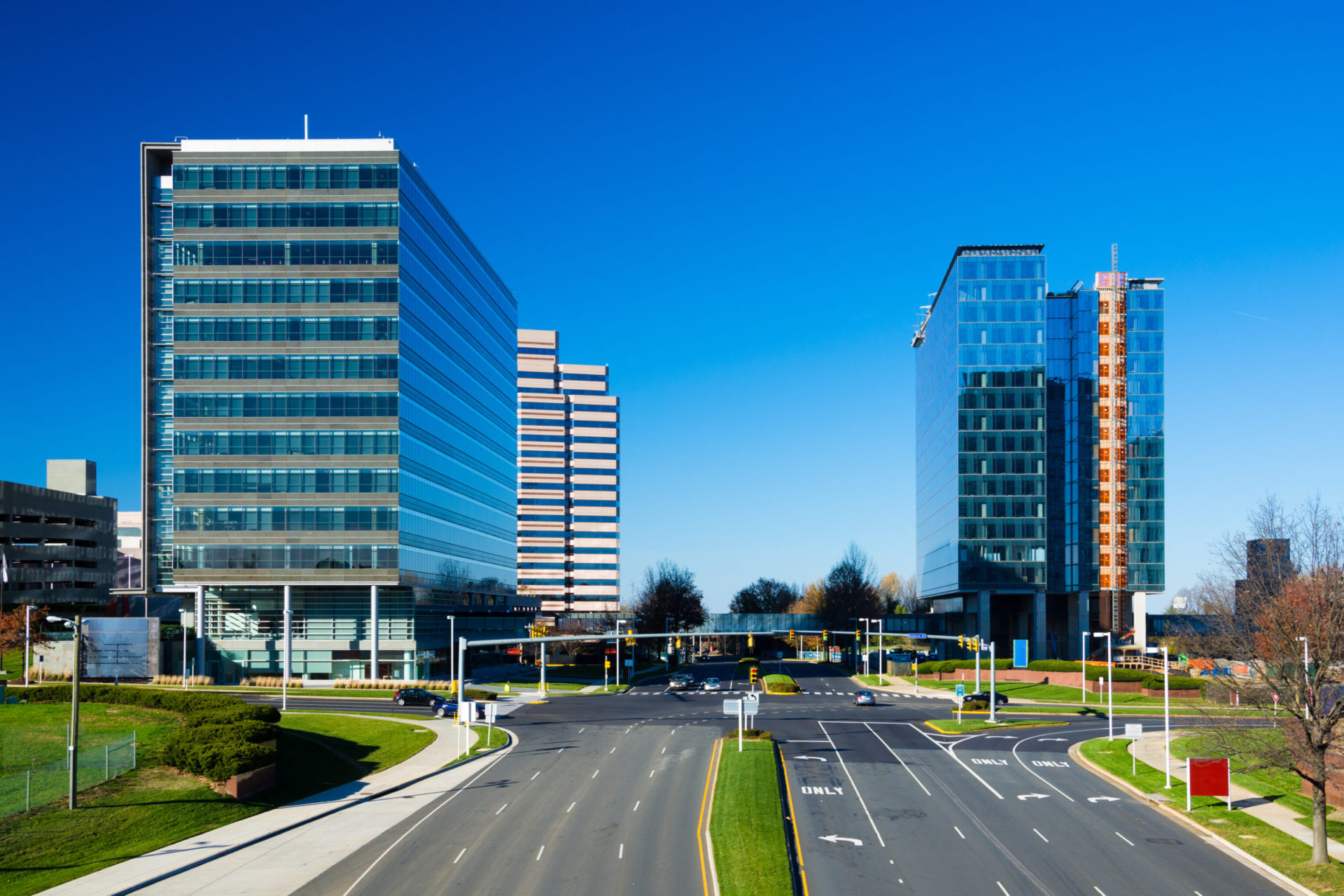
The mall is surrounded by office parks, strip malls, fast food, and other single-use developments, many of which are also owned by REITs. Just across Route 123 from Tysons Corner Center is another mall, Tysons Galleria, a $1 billion asset owned by the giant private equity firm Brookfield Asset Management, with headquarters in New York and a parent company in Canada.
It’s important to note that the Tysons Corner area has been a massive success in financial terms. It has created tremendous wealth for its investors and for its businesses, whose customers come from all around the region and even the world to shop at the malls, visit the movie theater, and eat at the restaurants.
Yet it is not quite a place. It is hard to imagine people saying they are from Tysons Corner, much less feeling hometown pride for it.
Tysons Corner is defined by its reliance on driving. People can drive in and out, but it’s difficult to walk around, except for within the malls. The separation of the malls from the surrounding offices and retail, and the further separation of the entire commercial district from the housing, make it unfit for navigation on foot.
Fairfax County has been trying to make Tysons more walkable for more than 15 years through a comprehensive plan that calls for wider sidewalks, denser housing near transit, bike infrastructure, and more. It has had success adding housing through zoning reforms. But those places are separated by major highways and interspersed among auto-only destinations, said Andrew Mondschein, a professor of urban and environmental planning at the University of Virginia School of Architecture who has studied walkability and Tysons Corner. “Tysons still feels like Tysons,” he said. “If you’re passing through, it doesn’t feel like Alexandria, it doesn’t feel like the older parts of Arlington.”
But the way that major thoroughfares separate the different areas into single uses, which has made it impossible for Tysons to evolve organically, is also what has made large parts of it investable for REITs and other giant investors.
Mixed-use development is a major complication for a REIT or an analyst at a private equity real estate firm. That analyst will be very capable of reducing a property to its statistics: its price per square foot, cap rate, daily traffic, local demographics, and so forth. But adding a feature that does not belong in a neat category will suddenly usher in a new level of complexity.
“The ability to slice and dice so finely harms mixed-use type investments in a whole lot of different ways,” said developer Ward Davis. In our phone call, he gave the example of an analyst going through a checklist of attributes for a multifamily property that would make it more marketable or less, such as the number of units, parking spaces, and amenities. For example, if the development has a pool to itself, it gets a check for “pool,” increasing its sale or rental value. But if the property is part of a mixed-use development that has a pool accessible to residents by footpath but is not technically owned by the property, it does not get a check.
Just as important is that huge financial institutions undertake large projects at scale and face enormous time pressures that are incompatible with the kind of incremental development that leads to real neighborhoods. Private equity funds in particular are investment vehicles that typically have time horizons of 10 years or less to return cash to investors. That is an added pressure to get projects turned around.
Traditional neighborhood developers, though, say that creating an actual neighborhood takes significantly longer. “The places that last take time to mature, but our market and regulatory environment treat land as a commodity to be turned, not a legacy to be cultivated,” David Horwath, the president of Land Innovations, said by email.
Horwath’s company, based in Nashville, aims to create town centers that include retail, commercial, and different kinds of residential, including mixed-use buildings. He has developments planned in Tennessee and Alabama with timelines from 15 to 40 years. If he worked for a big national development corporation, he said, the timelines would be shortened by two-thirds. “But when you’re trying to create a meaningful place, you can’t work under those terms,” he said in a video interview.
“Real estate is a 40-year asset class,” said Chris Leinberger, co-founder of Places Platform and a long-time industry consultant. An analyst at a real estate investment firm, he said, would typically evaluate a project based on what is known as a discounted cash flow analysis. That kind of analysis estimates how much income the project would generate each year, and then discounts each year’s income using a rate that reflects the time value of money (the fact that money owed to me is more valuable when I get it sooner rather than later) and the cost of capital. That allows the analyst to reduce the investment to a single number that sums up the total value today.
The shortcoming of such analyses is that they make it difficult to capture the value that would accrue to a project that created a neighborhood. A town center that became the heart of a thriving city, for example, might go up in value tenfold, but it would probably take 15 or 20 years to get there. It’s possible to model such a possibility, but it’s not straightforward.
It is hard enough for a company building in suburban Virginia on behalf of Alaskans and global investors to care about the small details that give a place its character — even if that were a goal.
It typically isn’t, though. Landowners and developers like REITs and private equity firms rarely state that they aim to build charming or lovely places. They certainly can make the case that their product will be commercially successful. And they do often tout environmental, social, and governance, or ESG, goals, which can translate into measurable objectives set by activist groups related to emissions or diversity. But beauty isn’t usually part of the pitch.
In fact, the features that would make a development beautiful can be a negative from the perspective of an analyst at a REIT or private equity firm. Anything that is unique makes a development less like a commodity and more like a bespoke product. The more commoditized the property, the better, because it can be sold into more-liquid markets.
“When you start mixing uses in a building, it becomes a more dynamic calculation to determine whether or not that investment is a worthwhile investment,” said Andrew Malick, the founder of Malick Infill Development, based in San Diego. “The investment world … they’re just dumb in that sense.”
“Dumb” processes that break down investments into quantifiable attributes work well for actual commodities, like steel, oil, or wheat. They even work well for consumer goods. But it’s problematic for the built environment, because people have to live there, permanently. They cannot discard it when they grow tired of it.
The value of what is truly charming is highly specific to context. For example, a rowhouse on Captains Row has little value outside Alexandria, Virginia. On paper, it lacks key amenities and has relatively low square footage. It’s old, lacks parking, has small rooms, doesn’t have any modern bathrooms, and so forth. If it were suddenly transported to somewhere in Tysons Corner, it would probably be a teardown.
By contrast, the triple-net-leased 7-Eleven can easily be quantified to show its value to someone who will never visit it. What makes it valuable is the very fact that you don’t have to worry about any of the context. And the less you have to worry about it, the more valuable it is.
“It ends up being that the most replaceable, the most boring assets actually can often have the highest value on the market,” said Payton Chung, a developer and land use expert. “An office building that looks exactly like another office building whose price you know very well, and that is also for instance in a city where a lot of other investors are always in the market to buy and sell buildings, will generally trade at a higher price than something that is bespoke.”
Again, the ease of investing in U.S. real estate — its legibility and its liquidity — is a feature of our economic system, one that has allowed for massive wealth creation. The lords of Downton Abbey could only have dreamed of the financing opportunities available to American developers today.
But it has come with negative side effects.
Chris Leinberger, over the course of his career, developed a taxonomy of different real estate types acceptable to large developers, for example the classic grocery store anchoring a strip mall, a development form now prevalent — and uniform — throughout the country. The siting, construction, and design of such a store would be the same in Massachusetts as in California, except that, at the very end of the process, Mediterranean-style roof tiling may be added to the California version.
“But they’re all pork bellies,” Leinberger said. “It’s a commodity.”
As the U.S. gets larger, richer, and more sophisticated, it is only logical that the market will gravitate toward investment vehicles that allow for larger scale. But the sameness and isolation of our built environment is not just the work of the invisible hand; policies have also encouraged this trend.
One possible solution discussed among traditional neighborhood developers is the creation of a vehicle, similar to a REIT, that provides incentives for incremental or traditional neighborhood design. Such a format would give preference to projects with longer time frames and perhaps smaller lots.
“The REITs are the way to get to scale,” said Howard Blackson, an urban designer in San Diego. “That’s the thing that I think is missing from the New Urbanism approach to federal funding…. We have to be able to build at industrial scale because that’s the era we’re in.”
Andrew Mondschein, the urban planning professor, said that, in order to retrofit edge cities like Tysons, and other unwalkable places that were built by huge corporations working with large plots of land, “you need large developers to have mechanisms, financialized mechanisms, for understanding how they can make money off of a walkable system just like they’re used to making off of these large separate-land-use plots.”
Yet any such funding mechanism remains purely conceptual. As of now, the industry and policymakers are not even aware that the problem exists.
Today, there are still some individual developers who do small-scale urbanist developments. They face an uphill battle getting financing from the banking system. And if they want to take on more ambitious projects, they need to find investors who are willing to accept a 20-plus-year timeline for getting returns, such as wealthy individuals or family offices that don’t face the constraints of private equity or REITs.
Leinberger has advocated for years for what he calls “patient equity” — that is, for very long-term-minded investors, including even the cities themselves, to be added into the capital stack for developments to ensure that they are brought along with an eye toward the creation of real neighborhoods.
The federal government has put the thumb on the scale in favor of large-scale, short-term developments. In theory, it could even out the scale by also creating such a regulatory structure that would allow for smaller, infill projects.
Whether such a product is even conceivable is a major question. But a first step would be to recognize the ways the government now gives preference in the built world around us not to what is most suited to life lived with other people but to what is big, uniform, and impersonal.